


Primary Muscle
Chest
Build Chest Strength, Improve Independent Arm Control & Develop Balanced Upper-Body Power
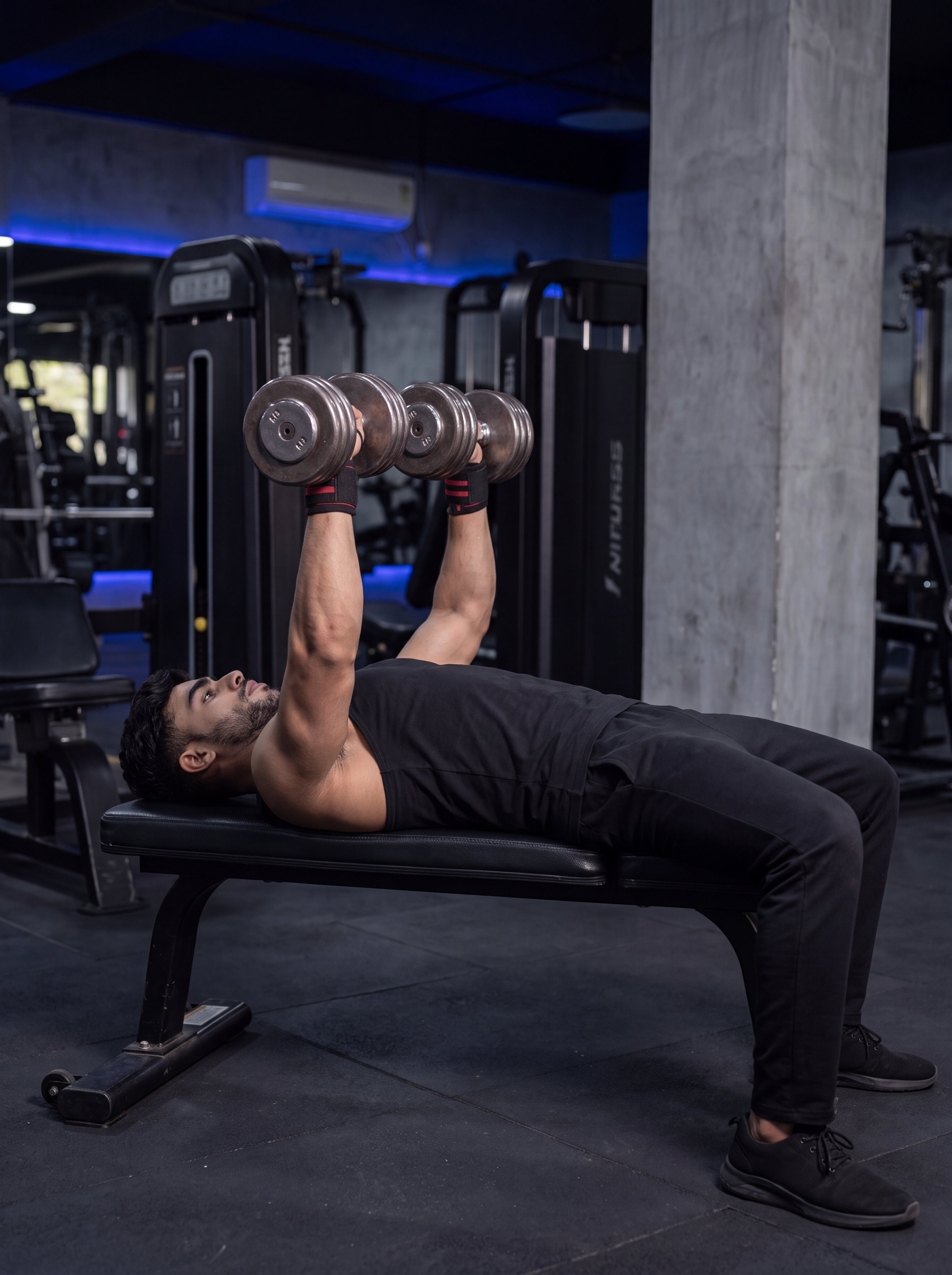
The Dumbbell Bench Press is a powerful compound exercise that develops the chest while also engaging the shoulders and triceps. By allowing each arm to work independently, it can help improve pressing control, address strength imbalances, and support balanced upper-body development.
Chest
Dumbbells & Bench
Intermediate
Compound
Understand which muscles do most of the work during the Dumbbell Bench Press and which supporting muscles help stabilize and complete each repetition.
Chest
Front Shoulder
Upper Arm
Shoulder-Girdle Stabilizer
Discover how the Dumbbell Bench Press helps build chest strength, support muscle growth, improve independent arm control, and develop a stronger, more balanced upper body.
Trains the pectoralis major through a powerful pressing movement, helping develop greater chest strength and upper-body pushing capacity.
Places meaningful tension on the chest through a controlled range of motion, making it a valuable exercise for building muscle size and development.
Each arm controls its own dumbbell, which can help reveal side-to-side strength differences and encourage more balanced pressing development.
Unlike a fixed barbell grip, dumbbells allow each arm greater freedom to follow a comfortable pressing path based on your individual mechanics.
Controlling two independent dumbbells requires greater coordination and stabilization throughout each repetition, helping improve overall pressing control.
Develops the chest while also training the anterior deltoids and triceps, supporting stronger performance across a variety of upper-body pushing exercises.
Follow these step-by-step instructions to perform the Dumbbell Bench Press with better control, proper technique, and effective chest engagement.
Sit on the end of a flat bench with one dumbbell resting securely on each thigh. Keep your feet planted firmly on the floor and maintain control of both dumbbells before lying back.
Choose a manageable weight that you can safely control during both the setup and the complete pressing movement.
Use your thighs to help guide the dumbbells upward as you carefully lie back on the bench. Position the dumbbells above your chest with your arms extended, wrists straight, and shoulder blades controlled against the bench.
Keep your feet firmly planted and create a stable upper-back position before beginning your first repetition.
Lower both dumbbells smoothly toward the sides of your chest while keeping your wrists stacked over your forearms. Allow your elbows to follow a natural angle from your torso and maintain full-body stability.
Do not let the dumbbells drop quickly or force an excessively deep range of motion. Lower only as far as you can comfortably maintain control and stable shoulder positioning.
Press both dumbbells upward with control until your arms are extended above the chest. Keep your wrists stable, maintain your upper-back position, and avoid allowing the dumbbells to drift excessively toward your head or abdomen.
Press both dumbbells evenly and keep them under control at the top instead of forcefully crashing them together.
Continue performing smooth, controlled repetitions while maintaining the same dumbbell path, wrist alignment, elbow position, breathing pattern, and full-body stability. End the set before your technique begins to break down.
Prioritize balanced, high-quality repetitions with both arms before increasing the weight. Progress gradually while keeping your technique consistent.
Avoid these common technique errors to improve chest engagement, maintain better control, and perform the Dumbbell Bench Press more effectively.
Allowing the elbows to flare too far outward can make the pressing position less efficient and may place unnecessary stress on the shoulders.
Keep your elbows at a natural angle from your torso and maintain your wrists stacked over your forearms throughout the movement.
Allowing the wrists to bend excessively backward can reduce pressing stability and make the dumbbells more difficult to control throughout each repetition.
Keep your wrists in a strong, neutral position and stack each dumbbell directly over the corresponding forearm.
Forcing the dumbbells excessively below a comfortable range can compromise shoulder positioning and make it harder to maintain control at the bottom of the movement.
Lower the dumbbells only as far as you can comfortably maintain stable shoulders, aligned wrists and forearms, and full control of the movement.
Choosing dumbbells that are too heavy can lead to unstable repetitions, uneven pressing, shortened range of motion, and breakdown of proper technique.
Use a manageable weight that allows both arms to move with consistent control, balanced technique, and an appropriate range of motion.
Apply these practical coaching cues to improve your Dumbbell Bench Press technique, maintain better control, and build strength with more balanced and consistent repetitions.
Keep your upper back firmly supported by the bench and maintain controlled shoulder positioning throughout every repetition.
Keep your shoulder blades controlled against the bench and avoid allowing your shoulders to roll forward as you press the dumbbells upward.
Proper alignment between the dumbbells, wrists, and forearms helps create a stronger and more controlled pressing position.
Keep your wrists neutral and position each dumbbell directly over the corresponding forearm instead of allowing the wrists to collapse backward.
Because each arm works independently, one side may begin moving faster, higher, or through a different path when fatigue starts to build.
Press and lower both dumbbells with consistent timing and control. End the set when you can no longer maintain balanced repetitions.
Progressive overload is valuable, but heavier dumbbells should not come at the expense of control, range of motion, balanced execution, or stable pressing mechanics.
Increase the load gradually only when you can complete your target repetitions with reliable technique and equal control on both sides.
Progress from learning the basic dumbbell setup to building greater chest strength with a structured approach that prioritizes technique, balanced control, and gradual overload.
Learn to position the dumbbells safely, establish a stable upper-back base, plant your feet firmly, and create a balanced starting position before using challenging resistance.
Safe dumbbell setup, foot stability, shoulder control, neutral wrists, and a repeatable starting position.
Use manageable dumbbells and focus on lowering and pressing both sides with consistent timing, stable wrists, and a controlled movement path throughout every repetition.
Controlled tempo, balanced arm movement, stable dumbbell paths, appropriate range of motion, and consistent body positioning.
Gradually increase dumbbell resistance while preserving the same reliable setup, controlled descent, stable upper back, neutral wrist position, and balanced pressing mechanics developed during the earlier stages.
Quality repetitions, equal control on both sides, gradual load increases, consistent technique, and appropriate recovery.
Continue progressing through planned increases in dumbbell resistance, repetitions, or training volume while maintaining balanced execution and avoiding unnecessary technique breakdown.
Sustainable progression, measurable performance, balanced pressing mechanics, consistent execution, and long-term strength development.
Find clear answers to common questions about Dumbbell Bench Press technique, muscles worked, range of motion, exercise selection, and training volume.
The Dumbbell Bench Press primarily trains the pectoralis major, which is the main muscle of the chest. The anterior deltoids and triceps brachii also contribute to the pressing movement, while additional stabilizing muscles help control each dumbbell.
Keep each dumbbell positioned over its corresponding forearm with your wrists in a strong, neutral position. Lower the dumbbells toward the sides of your chest while allowing your elbows to follow a natural angle from your torso.
Lower the dumbbells through a comfortable range of motion while maintaining stable shoulder positioning, neutral wrists, and full control. Avoid forcing the dumbbells excessively deep if doing so causes your shoulders to lose stability or creates discomfort.
Neither exercise is universally better. Dumbbells allow each arm to work independently and provide greater freedom of movement, while a barbell can make it easier to use heavier total loads and progress strength in a highly standardized movement. Both can be valuable depending on your goals and training program.
Yes. Beginners can perform the Dumbbell Bench Press when they start with manageable resistance and first learn proper setup, wrist alignment, elbow positioning, range of motion, and balanced control. The weight should be light enough to manage safely throughout the entire set, including the setup and finish.
The appropriate number of sets and repetitions depends on your training experience, goals, recovery, and overall program. For general muscle development, a common starting point is 3–4 working sets of approximately 6–12 controlled repetitions using a load that allows consistent and balanced technique.
Explore other chest exercises that complement the Dumbbell Bench Press and help you build strength across different pressing angles and movement patterns.
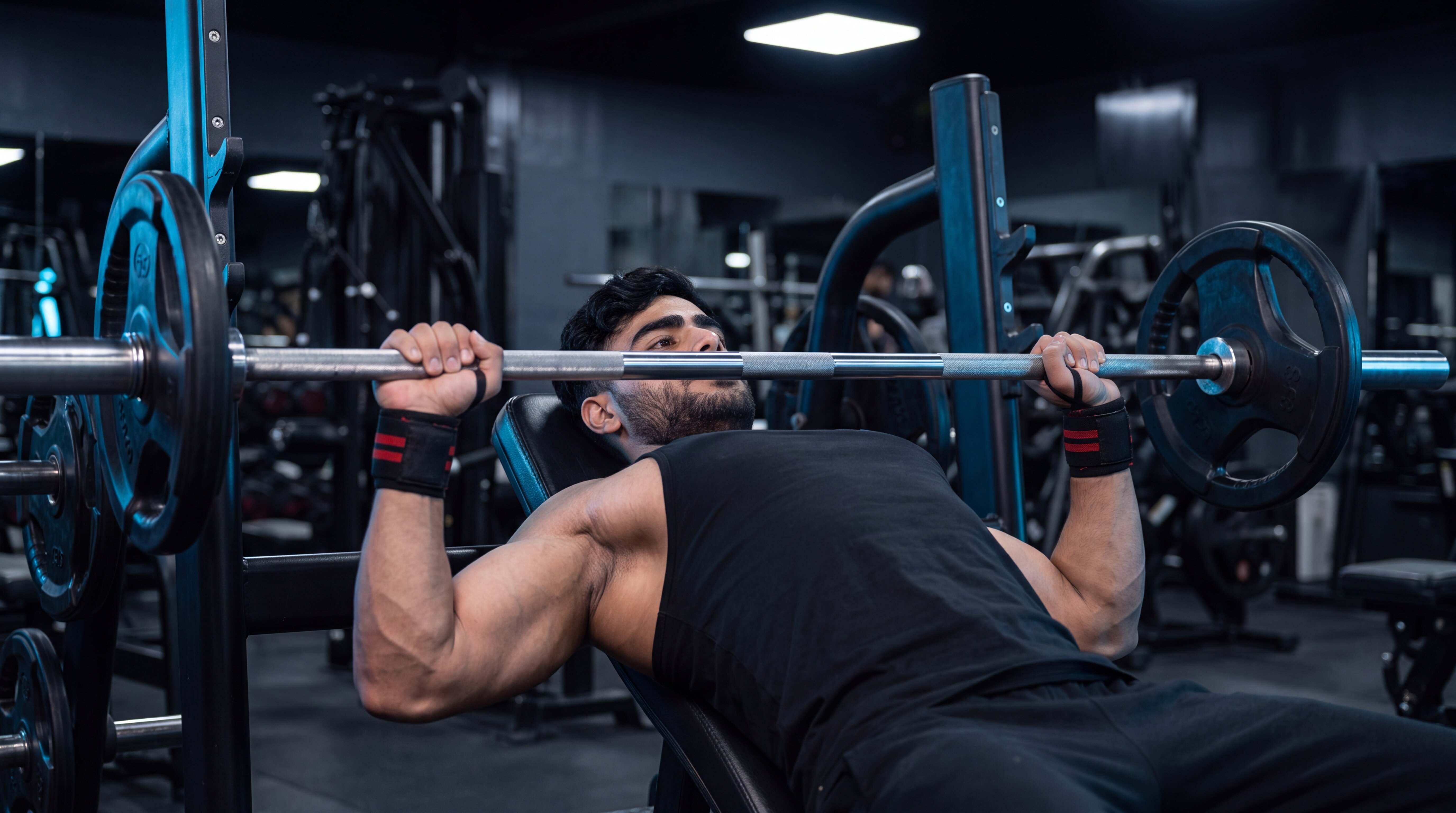
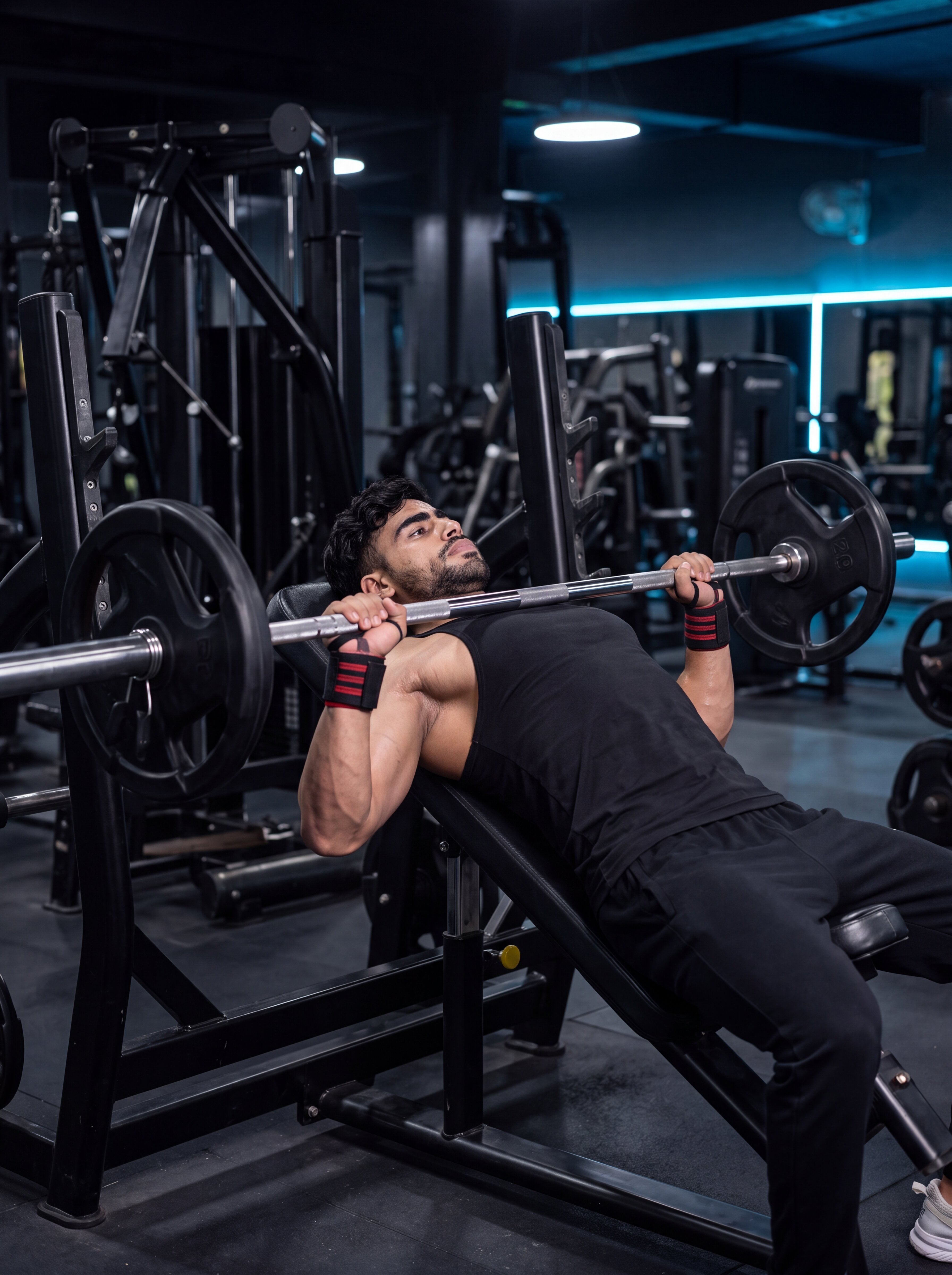
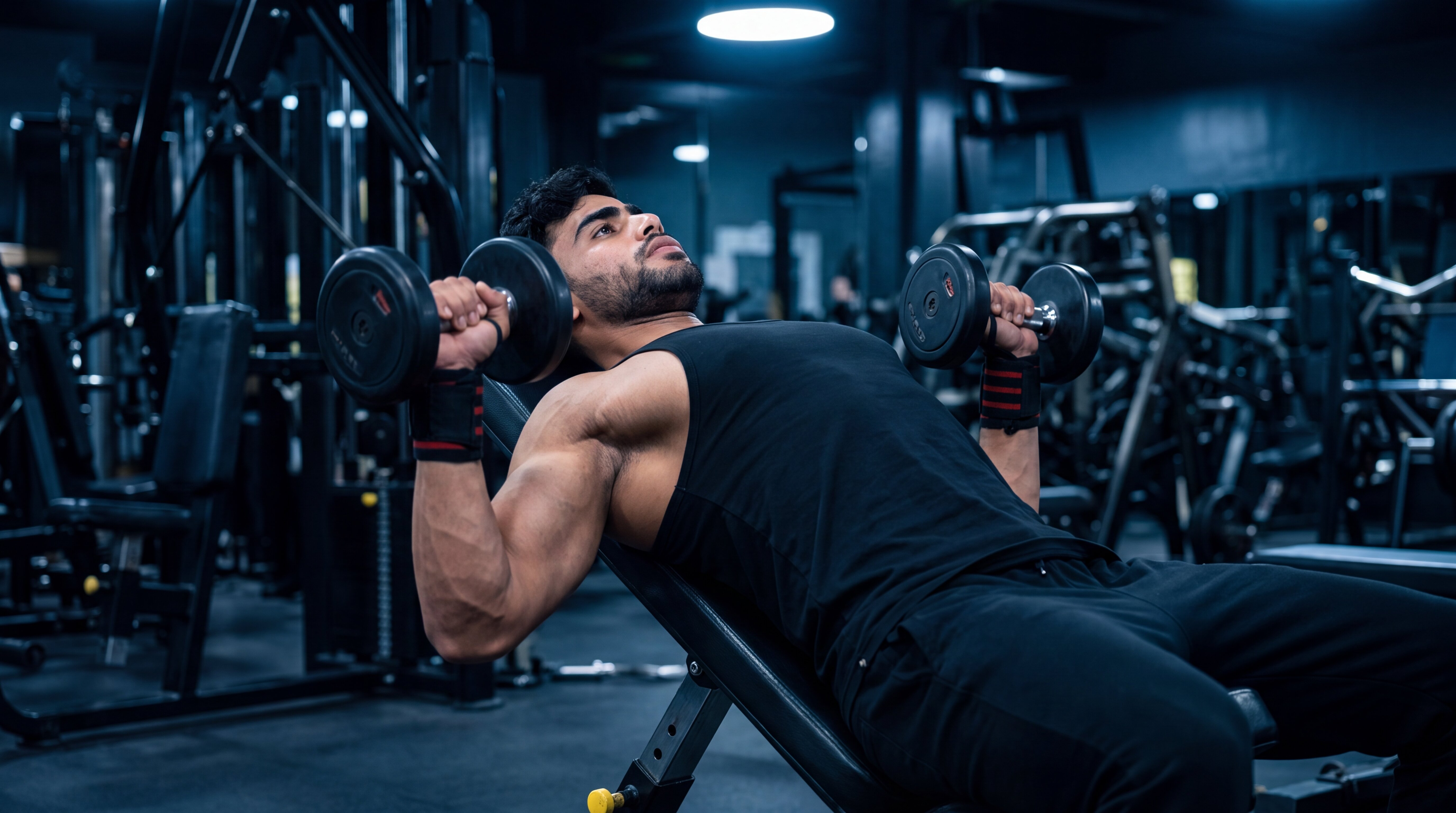
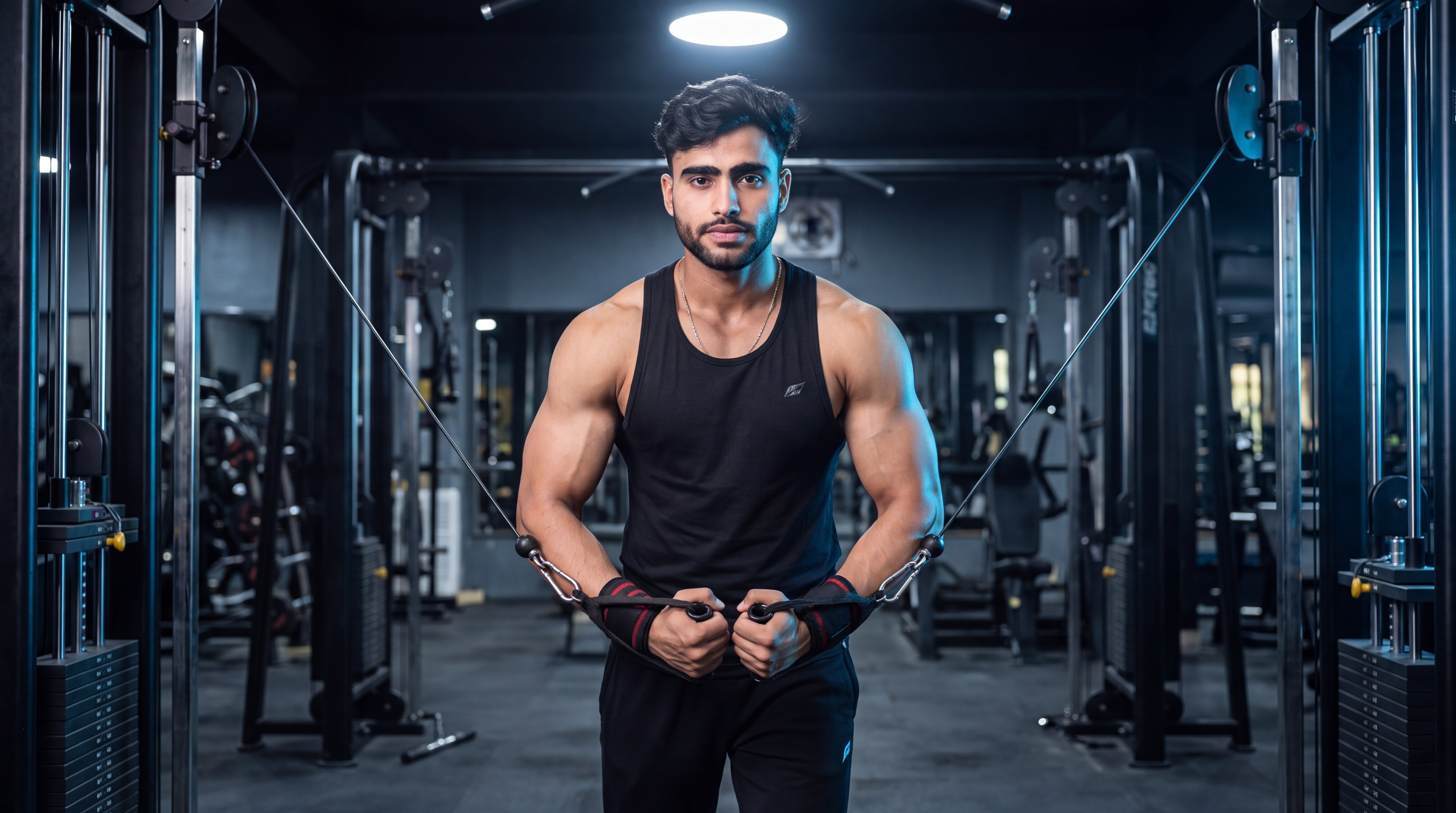
Continue building your chest training knowledge with step-by-step exercise guides covering proper technique, muscles worked, common mistakes, coaching tips, and progression strategies for stronger and more effective training.


