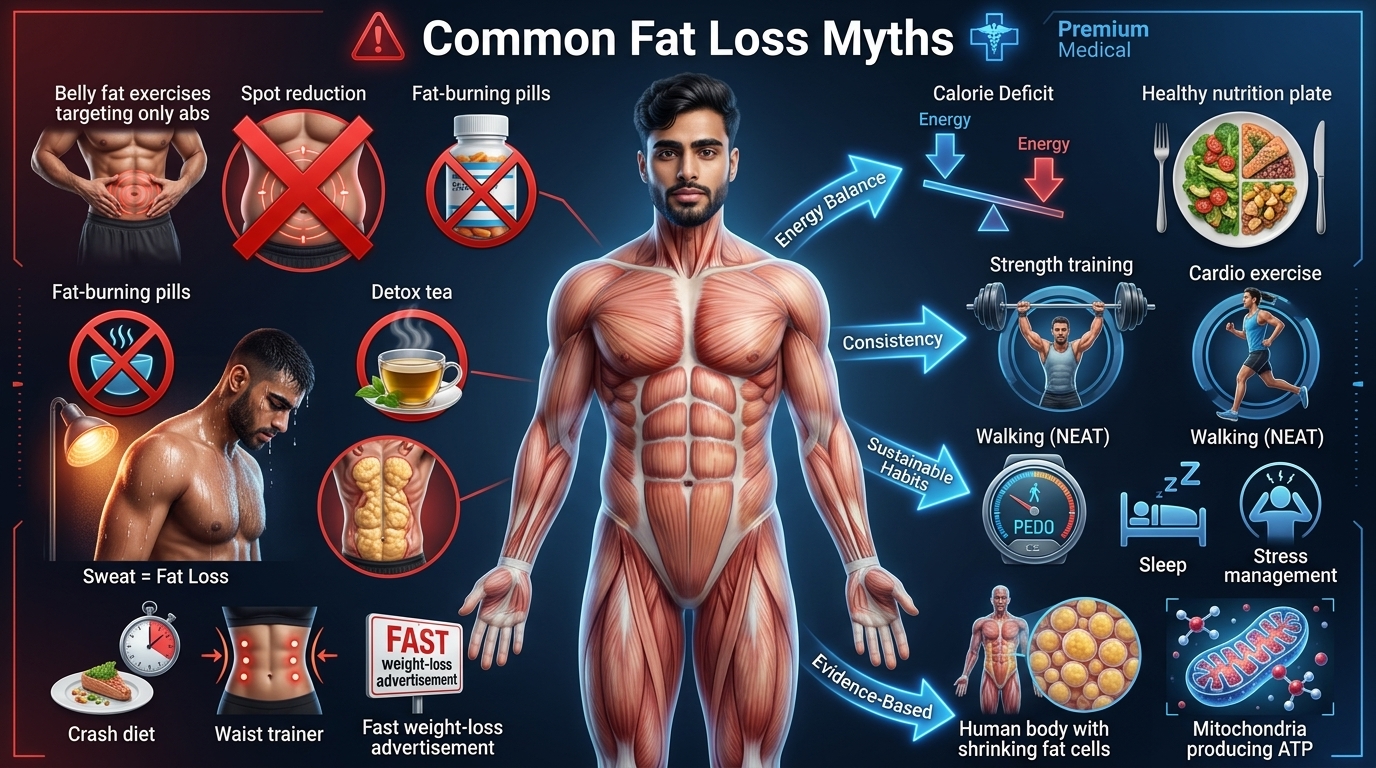
The Science Behind Losing Body Fat

Discover how your body stores, burns, and uses fat for energy through this complete beginner-friendly guide. Learn the science of calorie balance, metabolism, hormones, exercise, nutrition, and sustainable fat loss so you can make smarter decisions and achieve long-term results without falling for common fitness myths.

Beginner Friendly Science-Based Sustainable Fat Loss Metabolism Explained Actionable Strategies
Evidence-Based Information Beginner Friendly Sustainable Fat Loss Strategies
Learning Overview

Inside This Guide

This guide explains the science behind body fat and how sustainable fat loss actually works. You'll learn how your body stores and burns fat, why calorie balance matters, how metabolism influences energy use, and how nutrition, exercise, sleep, and hormones work together to help you lose body fat in a healthy, long-term way.

What You'll Learn

By the end of this guide, you'll understand the complete science of fat loss and be able to separate evidence-based facts from common fitness myths, allowing you to build healthier habits that deliver lasting results.

  • Understand what body fat is and why your body stores it.
  • Learn how calorie deficit drives sustainable fat loss.
  • Discover how metabolism affects the number of calories you burn each day.
  • Understand how exercise, nutrition, and daily activity contribute to fat loss.
  • Learn how sleep, stress, and hormones influence body composition.
  • Avoid common fat loss myths and build evidence-based habits for long-term success.
Quick Navigation

Explore This Guide

Navigate through the complete science of body fat loss. Learn how fat is stored, why calorie deficit works, how metabolism affects energy balance, and how nutrition, exercise, sleep, and hormones contribute to sustainable fat loss.

Introduction

Understanding How Your Body Loses Fat

Losing body fat is one of the most misunderstood topics in fitness. Social media often promotes quick fixes, detoxes, and "fat-burning" products, but real fat loss follows well-established scientific principles. Before exploring nutrition, exercise, or metabolism, it's essential to understand how your body stores energy and what actually happens when you lose body fat.

Every day, your body is constantly balancing energy. The food you eat provides calories, while your brain, muscles, heart, lungs, and every other organ continuously use those calories to keep you alive and active. When your body needs more energy than it receives from food, it begins using stored body fat as an alternative fuel source.

Body fat isn't simply "extra weight." It is a highly specialized energy reserve stored inside fat cells, ready to supply fuel whenever your body requires it. While essential body fat supports hormone production, organ protection, temperature regulation, and overall health, excess body fat accumulates when calorie intake consistently exceeds calorie expenditure over time.

Throughout this guide, you'll discover how calorie deficit truly works, how metabolism influences energy expenditure, what happens inside fat cells during fat burning, and how nutrition, strength training, cardio, sleep, and hormones all work together to help you lose body fat safely and sustainably.

Key Facts About Body Fat Loss

  • Energy Storage Body fat stores excess energy as triglycerides for future use.
  • Calorie Deficit Fat loss occurs when your body consistently burns more calories than it consumes.
  • Fat Burning Stored fat is broken down into fatty acids and converted into usable cellular energy.
  • Long-Term Success Sustainable fat loss comes from healthy habits—not crash diets or miracle supplements.
Chapter 01

What Is Body Fat?

Body fat is much more than stored energy. It is a specialized tissue that protects your organs, regulates body temperature, supports hormone production, and serves as your body's largest energy reserve. Understanding what body fat is—and why your body needs it—is the first step toward understanding healthy, sustainable fat loss.

Contrary to popular belief, body fat is not the enemy. Your body depends on a certain amount of fat to survive. Every healthy person carries essential fat that supports normal physiological functions, while additional fat acts as stored energy that can be used whenever food intake is insufficient.

Body fat is stored inside specialized cells called adipocytes. These cells store excess energy in the form of triglycerides after you eat more calories than your body immediately needs. When energy demand increases—such as during exercise or a calorie deficit—these fat stores can be broken down and used as fuel.

Not all body fat is the same. Essential fat is necessary for normal hormone production, brain function, nerve protection, reproduction, and insulation. Storage fat, on the other hand, provides energy reserves and cushioning for internal organs. While some storage fat is healthy, excessive accumulation over time increases the risk of metabolic diseases such as obesity, type 2 diabetes, and cardiovascular disease.
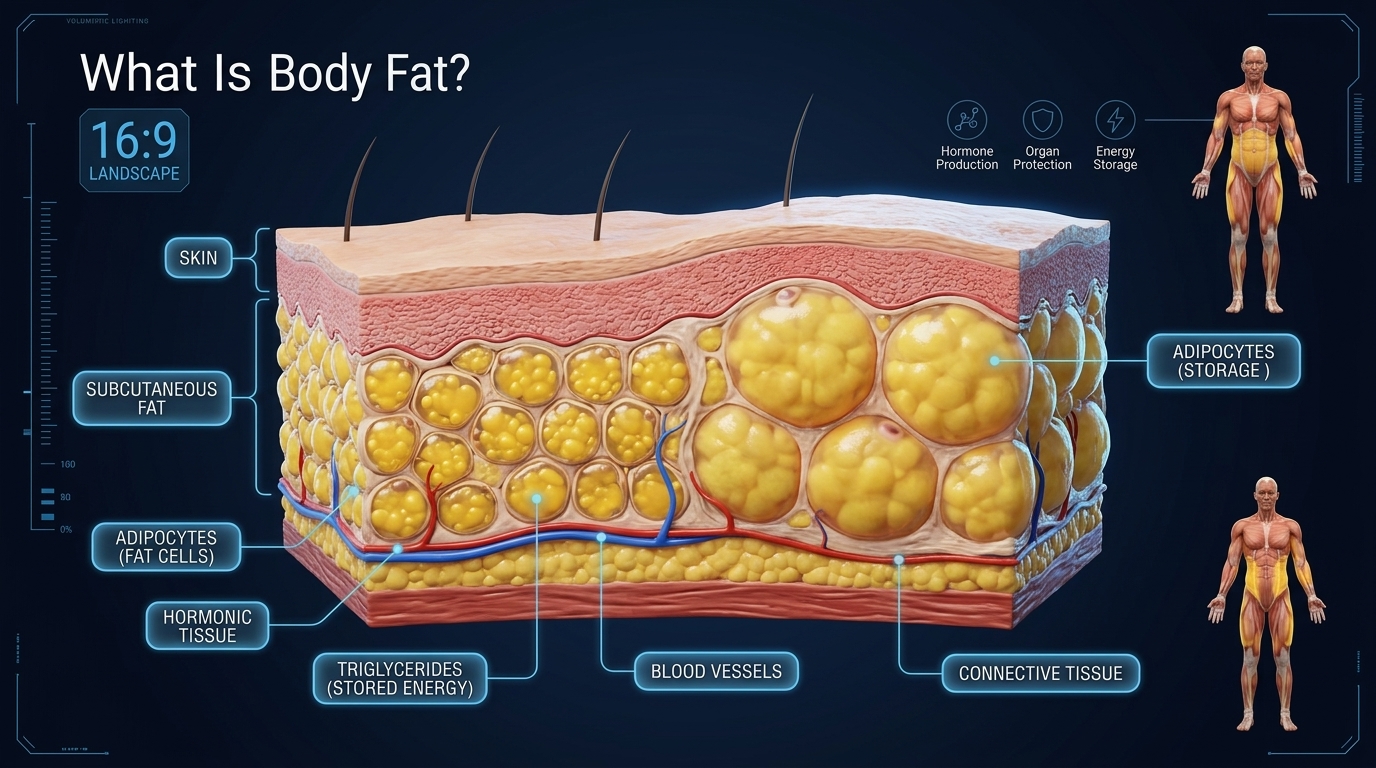
Scientific illustration showing adipose tissue with fat cells storing triglycerides beneath the skin.
Body fat is stored inside adipose tissue, where adipocytes safely store excess energy as triglycerides until the body requires additional fuel.

Understanding Body Fat Storage

Think of body fat as your body's rechargeable energy bank. Whenever you consume more calories than your body immediately uses, the surplus energy is stored inside fat cells for future needs. Later, when calorie intake becomes lower than energy demand, those same fat cells release stored energy back into the bloodstream.

This constant cycle of storing and releasing energy helps your body survive periods of fasting, prolonged exercise, illness, or reduced food availability. Fat storage is therefore a normal and essential biological process—not something your body does "wrong."

Why This Matters

Understanding that body fat is a normal, functional tissue changes the way you approach weight loss. Instead of trying to "destroy fat," you'll learn to create the right conditions for your body to gradually use stored fat as energy while protecting muscle mass and maintaining good health.
Chapter 02

Understanding Calorie Deficit

A calorie deficit is the scientific foundation of body fat loss. Regardless of the diet, workout plan, or supplement you follow, your body can only lose stored fat when it consistently uses more energy than it receives from food.

Every food and drink you consume provides energy in the form of calories. At the same time, your body constantly burns calories to keep your heart beating, lungs breathing, brain functioning, body temperature stable, and muscles moving. The relationship between these two processes is known as energy balance.

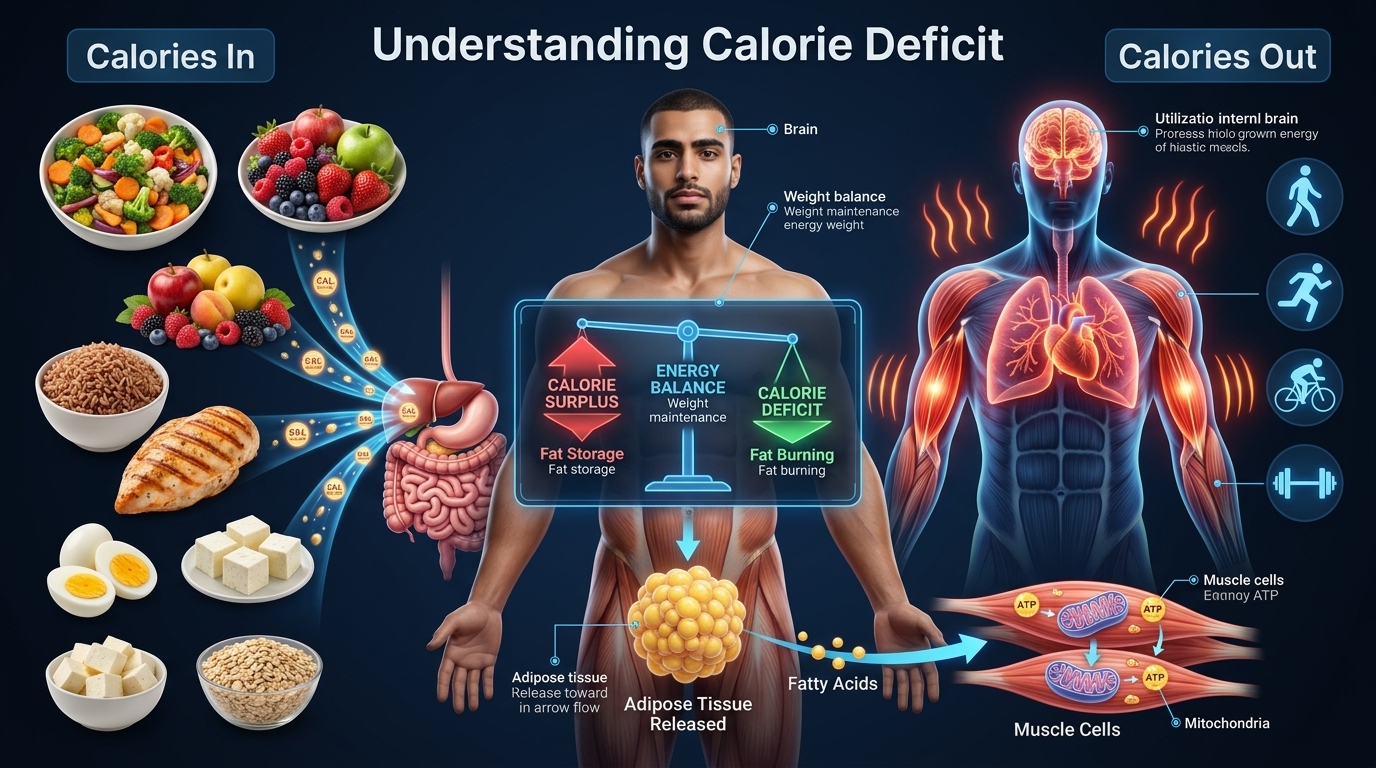
When you consume the same number of calories that your body burns, your weight generally remains stable. Eating more calories than you burn creates a calorie surplus, causing excess energy to be stored primarily as body fat. In contrast, consuming fewer calories than your body needs creates a calorie deficit, forcing the body to use stored fat as an alternative energy source.

Although exercise can increase calorie expenditure, nutrition usually has the greatest influence on creating a sustainable calorie deficit. Combining healthy eating with regular physical activity makes it easier to lose body fat while preserving muscle mass and maintaining overall health.

Scientific infographic illustrating calorie deficit with calories in, calories out, energy balance, and body fat being used for fuel.
Body fat loss occurs when calorie expenditure consistently exceeds calorie intake, creating an energy deficit that encourages the body to use stored fat for fuel.

Understanding Energy Balance

Imagine your body as a rechargeable battery. Food charges the battery by providing energy, while everyday activities gradually use that energy. If you continuously add more energy than you spend, the excess is stored as body fat. If you consistently use more energy than you replace, your body withdraws energy from its stored fat reserves.

This principle applies to everyone, regardless of age, gender, or fitness level. Different diets may use different food choices or eating patterns, but successful fat loss always depends on maintaining a calorie deficit over time.

Why This Matters

Understanding calorie deficit helps you ignore misleading promises about "magic" fat-burning foods or quick-fix diets. Instead of chasing shortcuts, you'll focus on the scientifically proven habits that consistently produce long-term fat loss and better overall health.

Chapter 03

How Metabolism Works

Your metabolism determines how your body converts food into usable energy throughout the day. Understanding how calories are burned—and what influences metabolic rate—helps explain why sustainable fat loss is about more than simply exercising harder.

Even while you're sleeping, breathing, or sitting quietly, your body is continuously burning calories to keep you alive. This ongoing energy expenditure is known as metabolism—a collection of thousands of chemical reactions that convert nutrients into the energy needed for every bodily function.

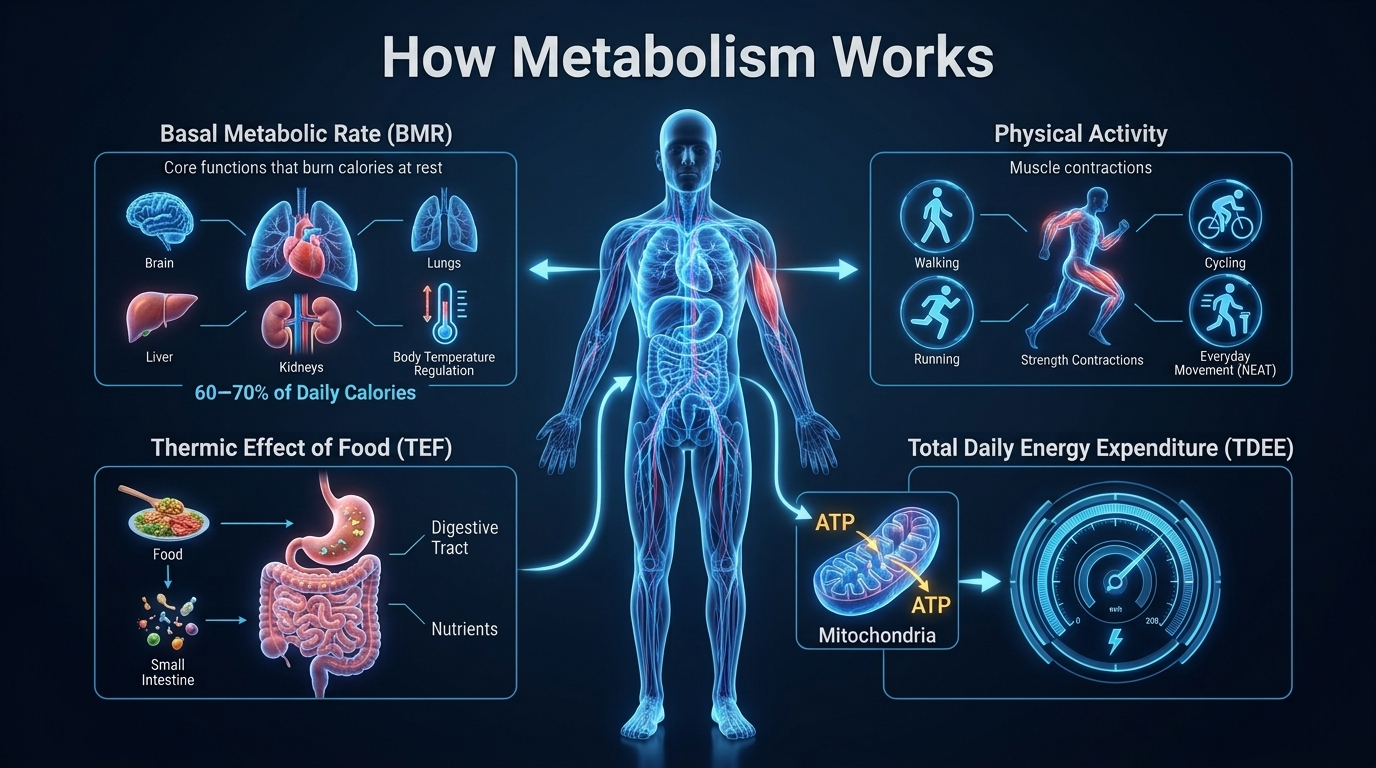
Your total daily energy expenditure (TDEE) is made up of several components. The largest is your Basal Metabolic Rate (BMR), which represents the calories required to maintain essential functions such as breathing, circulation, brain activity, and body temperature. Physical activity, exercise, and the energy required to digest food also contribute to the total number of calories you burn each day.

Metabolism is influenced by many factors, including age, body size, muscle mass, genetics, hormones, and activity level. While some of these factors cannot be changed, increasing lean muscle mass, staying physically active, and maintaining healthy lifestyle habits can help support a healthy metabolic rate over time.

Scientific infographic illustrating basal metabolic rate, physical activity, food digestion, and total daily energy expenditure.
Your metabolism is made up of basal metabolism, physical activity, exercise, and the energy required to digest food, all of which contribute to your total daily calorie expenditure.

The Four Parts of Daily Energy Expenditure

Basal Metabolic Rate (BMR) accounts for the majority of your daily calorie expenditure. It represents the energy your body needs simply to stay alive and usually makes up around 60–70% of total calories burned each day.

Physical activity, including walking, exercising, household chores, and everyday movement, significantly increases energy expenditure. Your body also burns calories while digesting and absorbing food through a process called the Thermic Effect of Food (TEF). Together, these components determine your Total Daily Energy Expenditure (TDEE), which forms the basis for creating an effective calorie deficit.

Why This Matters

Understanding metabolism helps you appreciate that fat loss depends on total daily energy expenditure—not just gym workouts. Small increases in daily movement, maintaining muscle mass through resistance training, eating enough protein, and getting adequate sleep all contribute to a healthier metabolism and make sustainable fat loss easier over time.

Chapter 04

The Fat-Burning Process

Discover what actually happens inside your body when you lose fat. Learn how stored fat is released from fat cells, transported through the bloodstream, converted into usable energy inside your cells, and ultimately leaves your body.

Many people imagine that body fat simply "melts away" during exercise, but the real process is far more fascinating. Fat loss is a carefully regulated biological process in which stored triglycerides are broken down, transported through the bloodstream, and converted into energy that powers your muscles and organs.

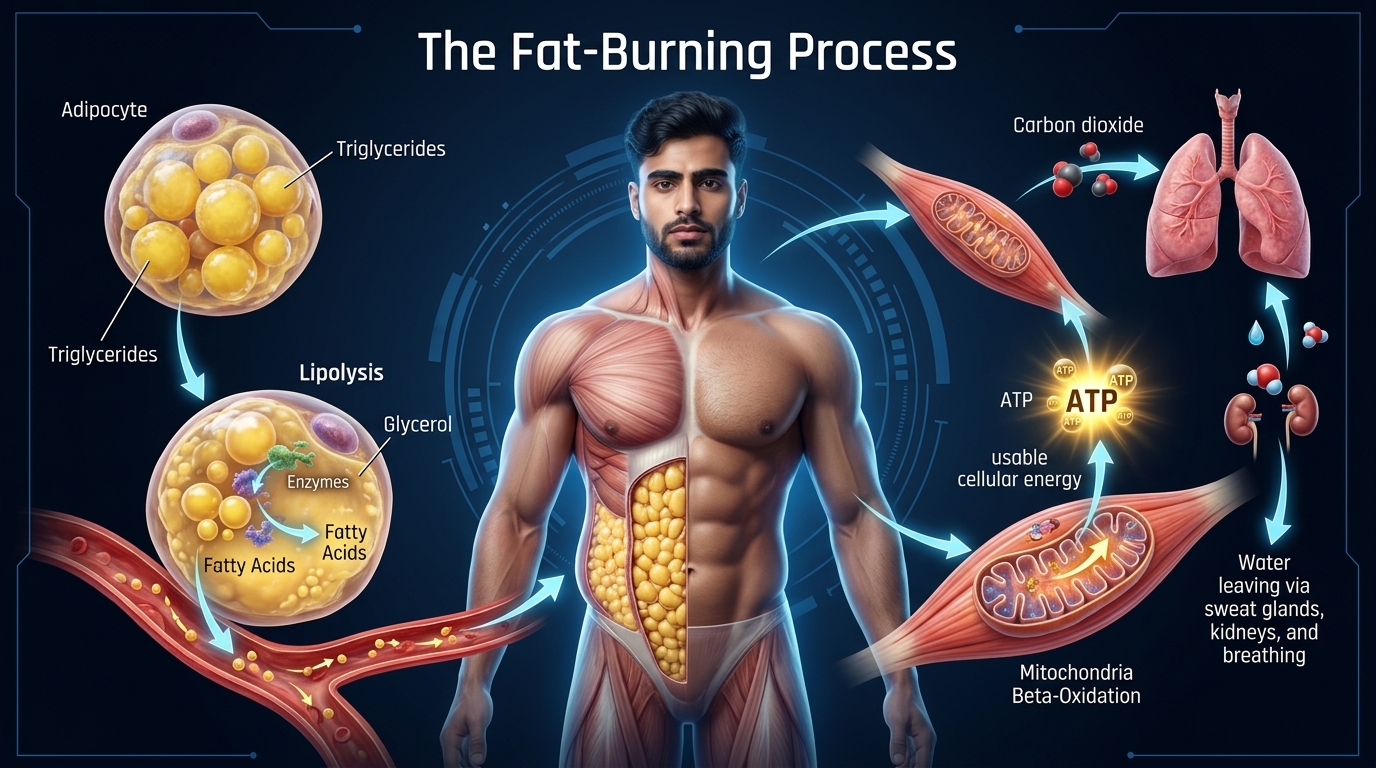
When you maintain a calorie deficit, hormones such as adrenaline and glucagon signal fat cells to begin a process called lipolysis. During lipolysis, triglycerides stored inside adipocytes are broken into fatty acids and glycerol. These molecules then enter the bloodstream and are transported to tissues that require energy.

Inside your cells, especially within the mitochondria, fatty acids undergo a series of chemical reactions called beta-oxidation. This process converts stored fat into ATP (adenosine triphosphate), the body's primary energy currency. As this happens, the carbon atoms from fat are released mainly as carbon dioxide through breathing, while hydrogen combines with oxygen to form water that leaves the body through urine, sweat, and respiration.

Scientific infographic illustrating lipolysis, fatty acid transport, beta-oxidation inside mitochondria, ATP production, carbon dioxide, and water release.
During fat loss, stored triglycerides are broken into fatty acids, transported through the bloodstream, converted into ATP inside mitochondria, and eventually leave the body as carbon dioxide and water.

From Stored Fat to Usable Energy

Think of body fat as fuel stored in a backup battery. Whenever your body needs additional energy, it unlocks this reserve by breaking stored triglycerides into smaller molecules that can travel through the bloodstream. These fatty acids are then delivered to active tissues where they are burned inside mitochondria to produce ATP, providing energy for movement and essential body functions.

Contrary to common myths, fat does not disappear through sweat or turn directly into muscle. Instead, the chemical components of fat are gradually converted into energy, carbon dioxide, and water through normal metabolic processes. This is why consistent calorie deficit—not excessive sweating—is responsible for sustainable fat loss.

Why This Matters

Understanding the fat-burning process helps you recognize why consistent nutrition and regular activity are more effective than gimmicks promising instant fat loss. Every workout and every healthy meal contributes to creating the conditions your body needs to gradually convert stored fat into usable energy while preserving overall health.

Chapter 05

Nutrition for Fat Loss

Nutrition plays the most important role in sustainable body fat loss. Learn how calories, protein, carbohydrates, healthy fats, fibre, hydration, and food quality work together to create a calorie deficit while supporting muscle preservation, energy levels, and long-term health.

No amount of exercise can completely compensate for poor eating habits. While physical activity increases calorie expenditure, nutrition largely determines whether your body remains in a calorie deficit. Building healthy eating habits makes fat loss more effective, sustainable, and easier to maintain over time.

A balanced fat-loss diet does not require eliminating entire food groups or following extreme eating patterns. Instead, it focuses on consuming mostly nutrient-dense foods that provide protein, complex carbohydrates, healthy fats, vitamins, minerals, and dietary fibre while helping you control overall calorie intake.

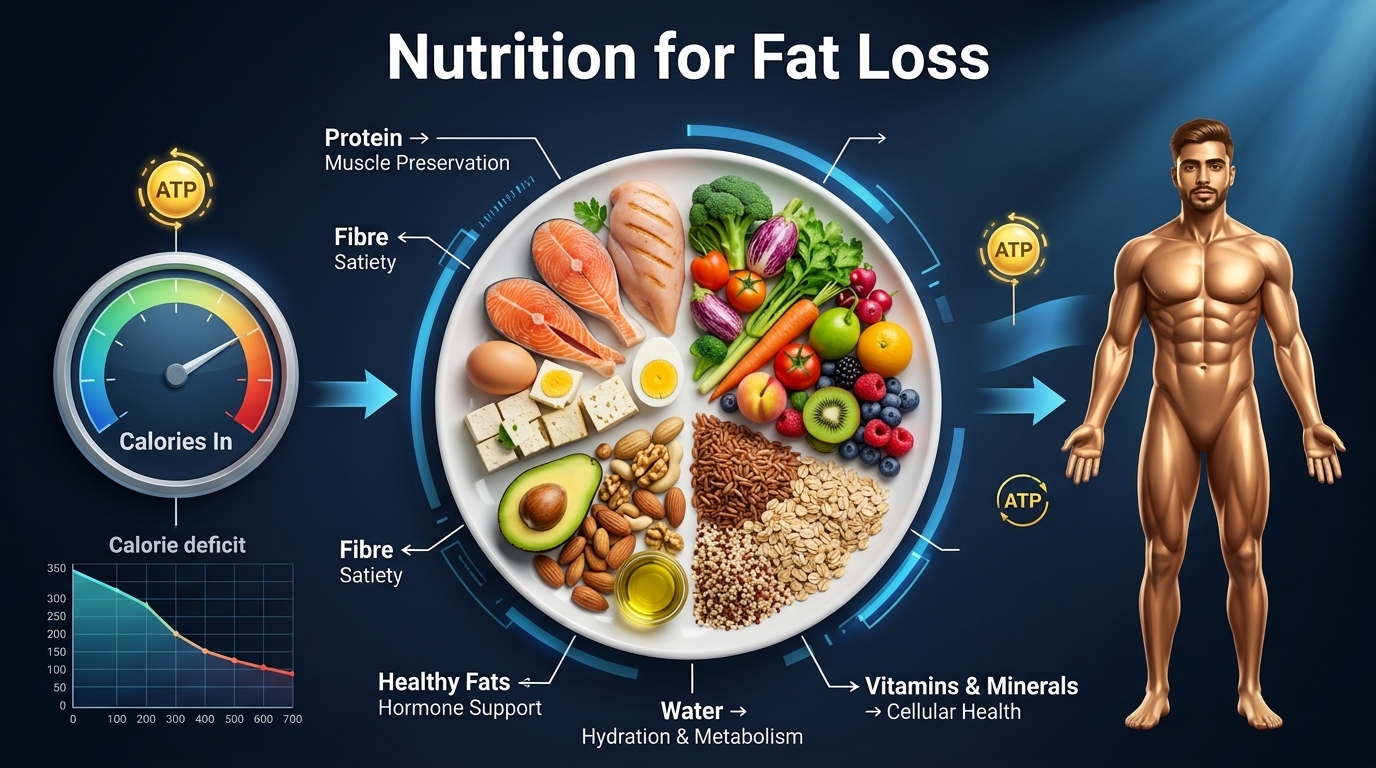
Protein deserves special attention during fat loss because it helps preserve lean muscle mass while increasing satiety. Fibre-rich foods such as vegetables, fruits, legumes, and whole grains promote fullness and support digestive health, while healthy fats and complex carbohydrates provide sustained energy for daily activities and exercise.

Scientific infographic showing a balanced fat-loss plate with lean protein, vegetables, whole grains, healthy fats, hydration, and calorie balance.
Sustainable fat loss is supported by nutrient-dense foods that help maintain a calorie deficit while providing adequate protein, fibre, healthy fats, carbohydrates, vitamins, and minerals.

Building a Fat-Loss Friendly Diet

A successful fat-loss diet begins with controlling total calorie intake while prioritizing food quality. Lean protein supports muscle maintenance, vegetables and fruits provide fibre and micronutrients, whole grains offer steady energy, and healthy fats contribute to hormone production and overall health. Together, these foods create balanced meals that help you stay satisfied while maintaining a calorie deficit.

Hydration also plays an important role. Drinking enough water supports normal metabolism, exercise performance, digestion, and appetite regulation. Rather than searching for "fat-burning foods," focus on consistently eating minimally processed, nutrient-rich meals that are enjoyable and sustainable over the long term.

The best nutrition plan is one you can realistically follow for months and years. Small, consistent improvements in food choices produce far greater results than restrictive diets that are difficult to maintain.

Why This Matters

Understanding the principles of healthy nutrition allows you to make informed food choices without relying on restrictive diets or social media trends. Prioritizing whole, nutrient-dense foods while maintaining a calorie deficit helps reduce body fat, preserve muscle mass, improve energy levels, and support long-term metabolic health.

Chapter 06

Exercise & Daily Activity

Exercise supports fat loss by increasing daily energy expenditure, preserving lean muscle mass, improving cardiovascular health, and enhancing long-term metabolic function. Learn how strength training, cardio, and everyday movement work together to support sustainable body fat loss.

While nutrition is the primary driver of a calorie deficit, exercise plays an essential supporting role in body fat loss. Physical activity increases the number of calories your body burns each day while helping preserve muscle mass, improve fitness, and maintain overall health during weight loss.

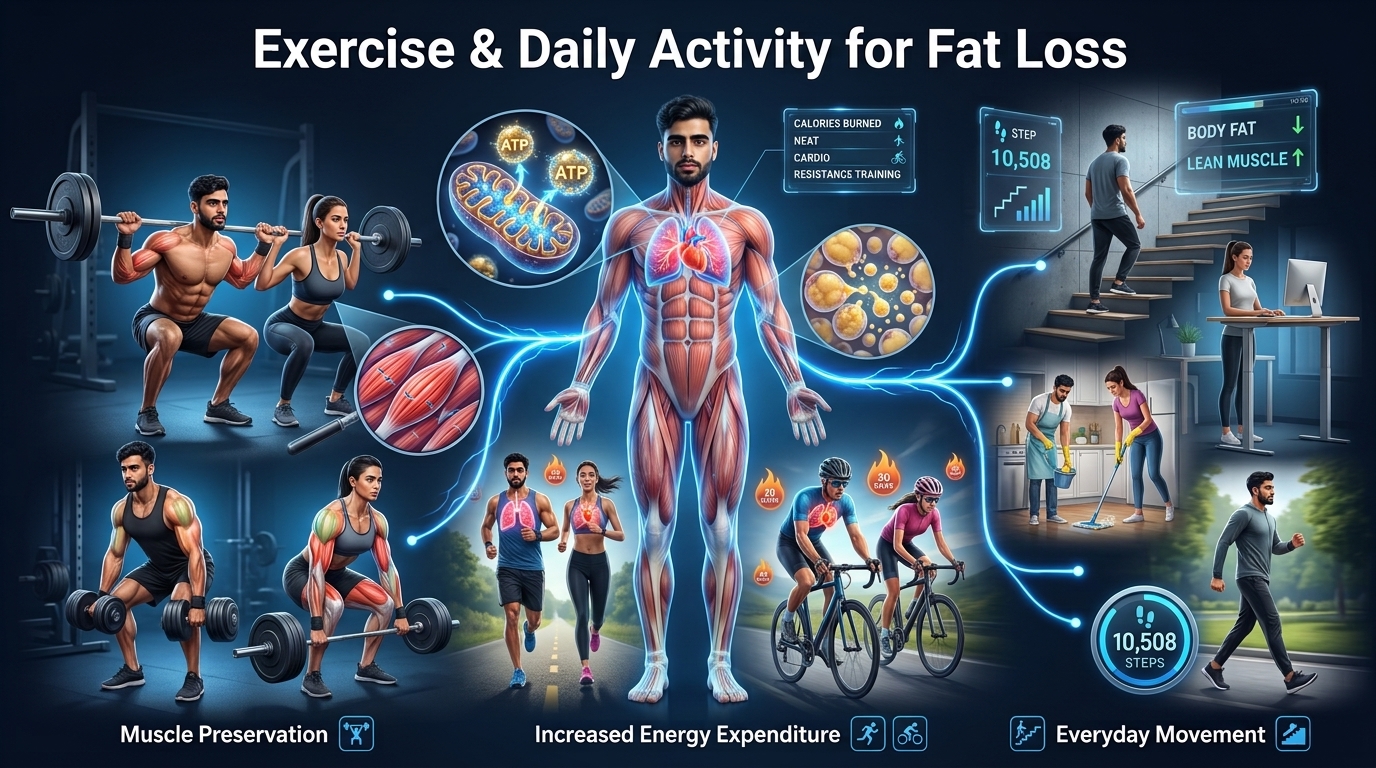
Strength training is especially valuable because it signals your body to maintain lean muscle tissue while losing fat. Preserving muscle helps maintain strength, supports metabolic health, and contributes to a healthier body composition. Cardiovascular exercise, such as walking, running, cycling, or swimming, further increases calorie expenditure and improves heart and lung function.

Daily movement outside structured workouts is equally important. Activities such as walking, climbing stairs, standing more often, household chores, and other everyday movements contribute to Non-Exercise Activity Thermogenesis (NEAT), which can significantly increase total daily calorie expenditure over time.

Scientific infographic showing strength training, cardio exercise, daily walking, NEAT, muscle preservation, and increased calorie expenditure.
Combining strength training, cardiovascular exercise, and daily movement helps increase calorie expenditure while preserving lean muscle mass during fat loss.

Three Pillars of Fat-Loss Exercise

Strength training helps preserve muscle while losing body fat, improving body composition and maintaining physical function. Compound exercises such as squats, deadlifts, presses, rows, and pull-ups engage multiple muscle groups and burn substantial amounts of energy.

Cardiovascular exercise increases calorie expenditure, strengthens the cardiovascular system, and improves endurance. Activities like brisk walking, jogging, cycling, rowing, and swimming can all contribute to a healthy fat-loss program.

Daily movement (NEAT) includes every activity outside formal exercise. Increasing daily step count, standing more frequently, using stairs, and remaining physically active throughout the day can collectively burn hundreds of additional calories without requiring intense workouts.

Why This Matters

Viewing exercise as more than a way to burn calories creates a healthier long-term perspective. Regular physical activity improves strength, cardiovascular fitness, bone health, insulin sensitivity, mood, and overall quality of life while helping preserve muscle mass during fat loss. Sustainable exercise habits make maintaining a healthy body composition much easier over time.

Chapter 07

Sleep, Stress & Hormones

Fat loss is influenced by more than calories and exercise. Learn how sleep quality, stress levels, and hormones affect appetite, metabolism, recovery, energy balance, and your ability to lose body fat sustainably.

Nutrition and exercise create the foundation for fat loss, but sleep and stress strongly influence how easily those habits can be maintained. Poor sleep and chronic stress can increase hunger, reduce energy levels, impair recovery, and make maintaining a calorie deficit significantly more challenging.

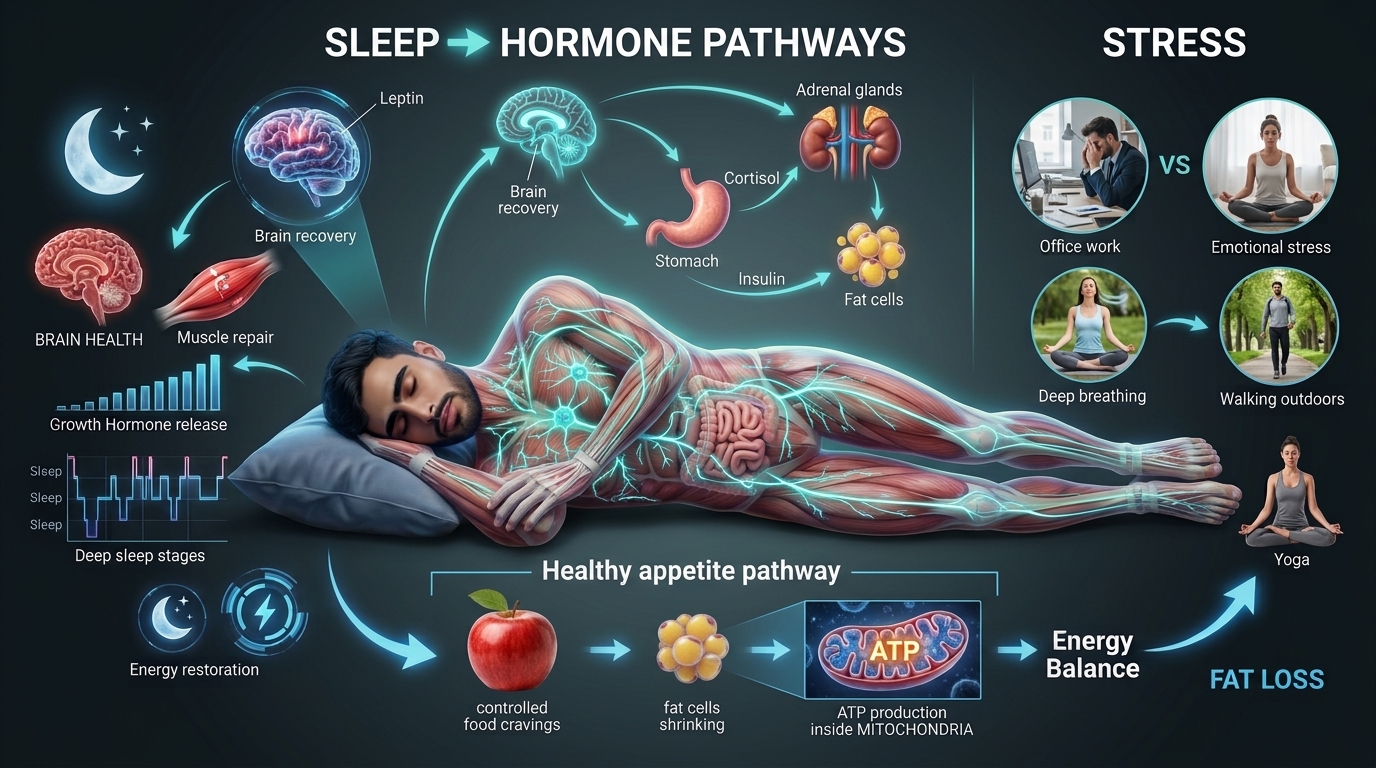
During sleep, your body repairs tissues, regulates hormones, supports immune function, and restores physical and mental performance. Consistently getting enough quality sleep helps regulate appetite-related hormones such as ghrelin, which stimulates hunger, and leptin, which signals fullness. Sleep deprivation can disrupt this balance, increasing cravings and making overeating more likely.

Chronic stress increases the release of cortisol, a hormone that helps the body respond to challenges. While cortisol itself does not directly cause fat gain, prolonged elevations may increase appetite, encourage emotional eating, reduce motivation to exercise, and interfere with healthy lifestyle habits. Managing stress through regular physical activity, relaxation techniques, and sufficient sleep supports long-term fat-loss success.

Scientific infographic illustrating sleep, cortisol, leptin, ghrelin, stress, appetite regulation, recovery, and body fat loss.
Quality sleep and effective stress management help regulate hormones involved in appetite, recovery, and energy balance, supporting sustainable fat loss.

How Sleep and Hormones Influence Fat Loss

Sleep provides your body with the opportunity to recover, repair tissues, and regulate important hormones involved in hunger, satiety, and metabolism. Consistent sleep supports better decision-making, improved exercise performance, and greater adherence to healthy nutrition habits.

Stress activates hormonal pathways that prepare your body to respond to challenges. While this response is normal, ongoing psychological stress can make healthy eating and regular exercise more difficult. Developing stress-management habits—such as physical activity, mindfulness, spending time outdoors, or maintaining social connections—supports both physical and mental well-being.

Sustainable fat loss is achieved by balancing nutrition, exercise, sleep, and stress management together rather than focusing on any single factor in isolation.

Why This Matters

Many people focus exclusively on diet and exercise while overlooking sleep and stress. Building healthy sleeping habits and managing everyday stress improves recovery, supports appetite regulation, increases energy for exercise, and makes long-term healthy eating habits more sustainable. Together, these factors contribute to lasting body fat loss and overall health.

Chapter 08

Common Fat Loss Myths

Separate scientific facts from popular misconceptions by exploring some of the most common myths about body fat, metabolism, exercise, dieting, spot reduction, and sustainable weight loss.

Body fat loss is one of the most misunderstood topics in health and fitness. Social media, advertisements, and quick-fix marketing often promote unrealistic promises that can create confusion and unrealistic expectations. Understanding what science actually says helps you avoid misinformation and build healthy, sustainable habits.

One of the most common myths is that certain foods, supplements, or exercises can "melt" body fat. In reality, no single food or workout directly burns fat on its own. Sustainable fat loss occurs when your body consistently remains in a calorie deficit while receiving adequate nutrition and regular physical activity.

Another widespread misconception is that you can reduce fat from a specific body part by exercising that area, a concept known as spot reduction. Scientific evidence shows that fat is lost throughout the body according to genetics, hormones, and overall energy balance—not from the muscles being exercised.

Scientific infographic comparing common fat loss myths with evidence-based facts about metabolism, spot reduction, dieting, exercise, and body fat.
Sustainable fat loss is based on scientific principles rather than popular myths, fad diets, or unrealistic marketing claims.

Separating Fat Loss Myths from Scientific Evidence

Many fat-loss myths originate from oversimplified advice, viral social media content, or marketing designed to sell products. Claims such as "fat-burning foods," "overnight weight loss," or "spot reduction exercises" often ignore the fundamental principles of energy balance and human physiology.

Scientific research consistently shows that long-term fat loss depends on maintaining a calorie deficit, eating a balanced diet, staying physically active, getting adequate sleep, and managing stress. These evidence-based habits produce gradual and sustainable improvements rather than dramatic overnight changes.

Before following any fat-loss advice, consider whether it is supported by qualified healthcare professionals, reputable health organizations, or peer-reviewed scientific research. Building your knowledge on reliable evidence helps you make informed decisions and avoid unnecessary frustration.

Why This Matters

Believing common fat-loss myths can lead to wasted time, unnecessary expense, and unrealistic expectations. Understanding the science behind body fat helps you focus on habits that actually work, making it easier to stay consistent, avoid fad diets, and build a healthier lifestyle that delivers lasting results.

FAQs

Frequently Asked Questions

Body fat loss is one of the most searched topics in health and fitness. Here are evidence-based answers to some of the most common beginner questions about body fat, calorie deficits, metabolism, and sustainable fat loss.

01
Body Fat Basics

What is body fat, and why does the body store it?

Body fat is a normal and essential tissue that stores excess energy in the form of triglycerides. It helps protect internal organs, insulates the body to maintain temperature, supports hormone production, and serves as an energy reserve during periods when calorie intake is lower than energy needs. While excessive body fat can increase the risk of certain health conditions, maintaining a healthy amount of body fat is essential for normal physiological function and overall well-being.

02
Calorie Deficit

What is a calorie deficit, and why is it important for fat loss?

A calorie deficit occurs when your body uses more energy than it receives from food and drinks. To meet its energy requirements, the body begins using stored energy, including body fat. Creating a moderate calorie deficit through balanced nutrition, regular physical activity, or a combination of both is the scientifically accepted foundation of sustainable fat loss. Extreme calorie restriction is generally unnecessary and may be difficult to maintain over time.

03
Metabolism

How does the body actually burn stored fat?

When your body needs additional energy, hormones signal fat cells to release stored triglycerides through a process called lipolysis. These triglycerides are broken down into fatty acids and glycerol, which travel through the bloodstream to cells that require energy. Inside the mitochondria, fatty acids are converted into ATP, the body's primary energy source. Most of the lost fat eventually leaves the body as carbon dioxide through breathing, while the remainder is excreted as water through urine, sweat, and respiration.

04
Exercise

Can I lose body fat without exercising?

Yes. Fat loss is possible without structured exercise if you consistently maintain a calorie deficit through nutrition. However, combining healthy eating with regular physical activity offers additional benefits, including preserving muscle mass, improving cardiovascular health, increasing daily calorie expenditure, and supporting long-term weight management. Exercise also improves strength, fitness, and overall quality of life beyond its role in fat loss.

05
Healthy Progress

How quickly can I lose body fat safely?

Healthy fat loss is generally gradual rather than rapid. Losing weight too quickly may increase the likelihood of losing muscle mass, feeling fatigued, or finding the diet difficult to maintain. A moderate calorie deficit, balanced nutrition, regular exercise, adequate sleep, and consistency over time provide the best foundation for sustainable fat loss and long-term weight management.

06
Common Myth

Does sweating mean I'm burning more body fat?

No. Sweating is your body's natural cooling mechanism and primarily results in temporary water loss, not fat loss. You may weigh slightly less after a sweaty workout because of fluid loss, but this weight returns once you rehydrate. Body fat is reduced only when your body consistently uses stored fat for energy by maintaining a calorie deficit over time.

07
Fat Loss Myths

Can I lose fat from only my belly or another specific body part?

No. Scientific research does not support the concept of spot reduction. Exercises that target a particular muscle strengthen that muscle, but they do not selectively burn fat from the surrounding area. As your body remains in a calorie deficit, fat is gradually lost from different regions according to genetics, hormones, age, and individual body composition. Consistency with healthy eating and regular exercise is the most effective strategy for reducing overall body fat.

08
Nutrition

Does eating at night automatically cause body fat gain?

Not necessarily. Body fat gain is primarily determined by your overall energy balance rather than the time of day you eat. Consuming more calories than your body uses over time can lead to fat gain, whether those calories are eaten in the morning or at night. Choosing nutritious foods and staying within your daily energy needs is generally more important than meal timing alone.

09
Exercise

Which type of exercise burns the most body fat?

There is no single "best" fat-burning exercise for everyone. Aerobic activities such as walking, cycling, swimming, and running increase calorie expenditure, while resistance training helps preserve or build muscle during fat loss. A combination of strength training, cardiovascular exercise, and increased daily movement provides the greatest long-term health benefits and supports sustainable body fat reduction.

10
Supplements

Do fat-burning supplements really work?

Most fat-burning supplements provide little or no meaningful effect on long-term body fat loss. Sustainable results come from maintaining a calorie deficit, eating a balanced diet, staying physically active, getting enough sleep, and consistently following healthy habits. Be cautious of products that promise rapid or effortless fat loss, as these claims are often not supported by high-quality scientific evidence.

11
Weight Plateau

Why has my weight stopped changing even though I'm dieting?

Temporary weight-loss plateaus are common. Changes in body water, glycogen stores, digestion, hormonal fluctuations, and reduced energy needs as body weight decreases can all influence the number on the scale. Rather than focusing only on daily weight changes, monitor long-term trends, body measurements, clothing fit, physical performance, and healthy lifestyle habits while remaining consistent with your nutrition and activity plan.

12
Muscle Preservation

How can I lose body fat without losing muscle?

The best way to preserve muscle during fat loss is to maintain a moderate calorie deficit, consume adequate dietary protein, perform regular resistance training, and prioritize recovery through sufficient sleep and stress management. Rapid weight loss and severe calorie restriction increase the likelihood of losing lean muscle mass, whereas gradual, sustainable fat loss better supports muscle preservation and long-term health.

Chapter 10

Key Takeaways

Review the most important lessons from this guide and reinforce the scientific principles that support healthy, sustainable body fat loss through nutrition, exercise, sleep, and long-term lifestyle habits.

Throughout this guide, you've learned that body fat is a normal and essential part of human physiology, serving important roles in energy storage, hormone production, insulation, and organ protection. Healthy fat loss is not about eliminating body fat completely—it is about reducing excess body fat while maintaining overall health and preserving lean body mass.

Sustainable fat loss is built on evidence-based habits rather than shortcuts. Maintaining a moderate calorie deficit, eating a balanced and nutrient-dense diet, staying physically active, getting sufficient sleep, managing stress, and remaining consistent over time are the foundations of long-term success. No single food, exercise, or supplement can replace these core principles.

The key lessons below summarize the scientific concepts covered throughout this guide. Use them as practical reminders whenever you plan your meals, exercise routine, or long-term health goals, and remember that lasting progress comes from consistency rather than perfection.

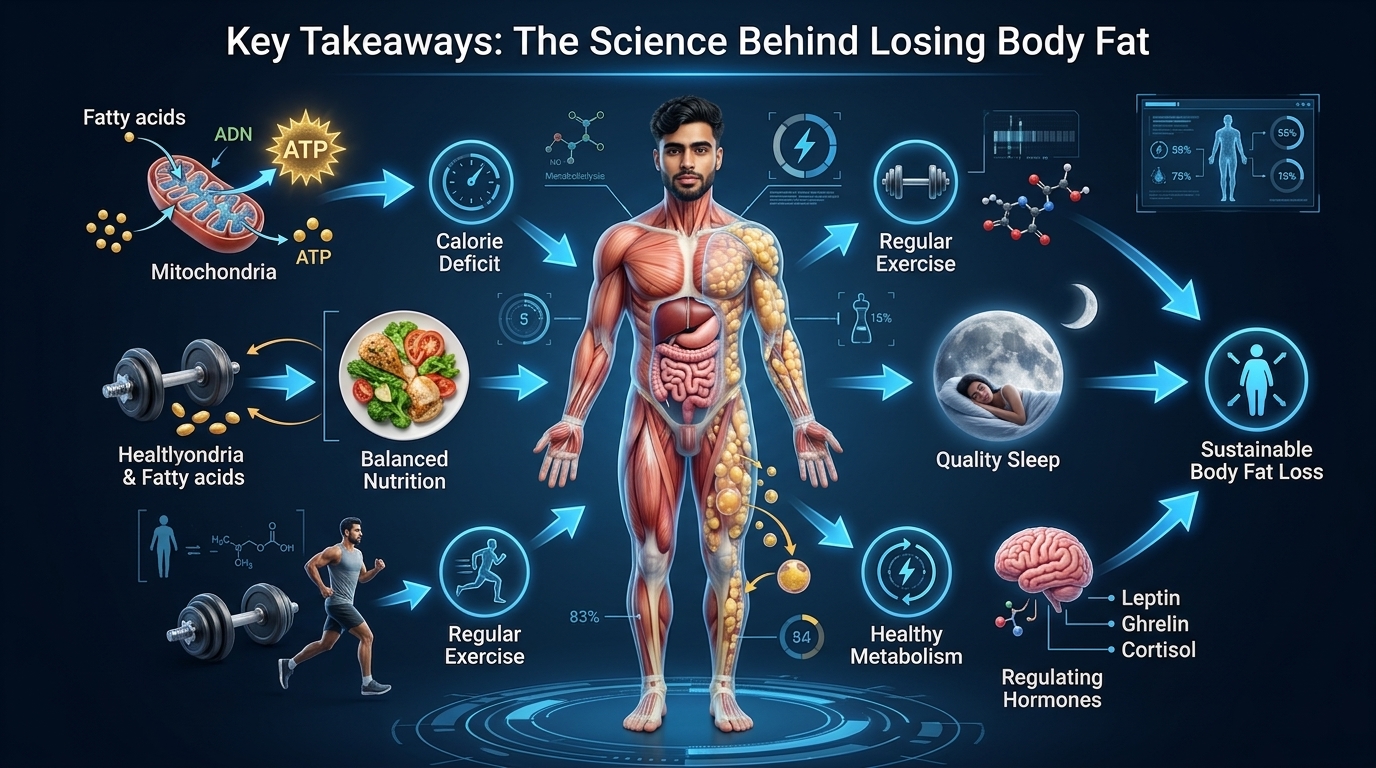
Scientific infographic summarizing the essential principles of sustainable body fat loss, including calorie deficit, metabolism, nutrition, exercise, sleep, stress management, and healthy lifestyle habits.
Sustainable body fat loss is achieved by combining healthy nutrition, regular exercise, quality sleep, stress management, and consistent evidence-based lifestyle habits.

Bringing Everything Together

Body fat loss is a gradual biological process driven by energy balance. A consistent calorie deficit encourages the body to use stored fat for energy, while balanced nutrition provides the nutrients needed to maintain health, support recovery, and preserve lean muscle mass during weight loss.

Exercise enhances fat-loss efforts by increasing daily energy expenditure, improving cardiovascular fitness, preserving muscle, and supporting overall physical health. Combined with adequate sleep and effective stress management, these lifestyle habits help regulate appetite, improve recovery, and make healthy behaviors easier to maintain over time.

Lasting success comes from building realistic habits that fit your lifestyle. Small improvements practiced consistently over weeks, months, and years have a far greater impact than following restrictive diets, chasing quick fixes, or believing common fat-loss myths.

Why This Matters

Understanding how body fat is stored, used, and reduced allows you to make informed decisions rather than relying on misinformation or unrealistic expectations. By focusing on balanced nutrition, regular physical activity, quality sleep, stress management, and gradual progress, you can develop sustainable habits that support lifelong health—not just temporary weight loss.

Continue Your Health & Fitness Journey

You've Completed The Science Behind Losing Body Fat

Congratulations on completing this guide. You now understand how body fat is stored, how a calorie deficit works, how metabolism uses stored fat for energy, and why nutrition, exercise, sleep, stress management, and consistency are the true foundations of sustainable fat loss.

Losing body fat is not about following restrictive diets, chasing quick fixes, or believing popular myths. It is the result of making informed decisions, developing healthy habits, and staying consistent over time. Every nutritious meal, every workout, every good night's sleep, and every positive lifestyle choice contributes to better long-term health.

At Atul Tomar Fitness, our mission is to simplify exercise science and nutrition into practical, beginner-friendly education backed by reliable scientific evidence. Whether you're learning proper exercise technique, improving your nutrition, or tracking your fitness progress, we're here to support every step of your journey.

Dumbbell icon

Exercise Library

Learn proper exercise technique with detailed step-by-step guides covering muscles worked, execution, common mistakes, benefits, and beginner-friendly training tips.

Apple icon

Nutrition Guides

Continue exploring evidence-based articles covering weight management, healthy eating, macronutrients, micronutrients, hydration, recovery, and sports nutrition.

Calculator icon

Fitness Calculators

Estimate your calorie needs, body fat percentage, BMI, lean body mass, protein intake, water requirements, and other useful health metrics with practical fitness calculators.

Shield with checkmark icon

Evidence-Based Learning

Every guide is built using current scientific knowledge to help you understand fitness and nutrition through accurate, practical, and beginner-friendly educational content.

Learn. Apply. Stay Consistent.

Keep Building Your Knowledge with Atul Tomar Fitness

Completing this guide is only the beginning. Continue exploring our growing collection of exercise tutorials, nutrition resources, fitness calculators, and evidence-based educational articles designed to help you make informed decisions and achieve your health and fitness goals with confidence.

"Sustainable fat loss isn't achieved through perfection—it's built through consistent, evidence-based choices repeated every day."

Thank you for reading The Science Behind Losing Body Fat. We hope this guide has helped you better understand how body fat, metabolism, nutrition, exercise, sleep, and healthy lifestyle habits work together to support long-term success. Continue exploring our educational resources to strengthen your knowledge, improve your fitness, and build healthy habits that last a lifetime.