Evidence-Based Fat Loss Guide

Fat Loss Fundamentals

Discover the complete science of fat loss with this evidence-based guide. Learn how your body stores and burns fat through energy balance, metabolism, calorie deficit, exercise, nutrition, hormones, and sustainable lifestyle strategies to lose body fat effectively while preserving muscle and improving long-term health.

Fat Loss Fundamentals Guide

Calorie Deficit

Burn Body Fat

Metabolism

Boost Energy Use

What You'll Learn

Master the complete science of fat loss—from understanding how your body stores and burns fat to applying evidence-based nutrition, exercise, metabolism, and sustainable lifestyle strategies for long-term success.

20+ Learning Topics

Explore every essential concept, including calorie deficit, energy balance, metabolism, body fat, exercise, nutrition, hormones, and sustainable fat loss.

Science-Based Learning

Understand the latest evidence-backed fat loss research with simple, practical explanations that are easy to understand and apply in everyday life.

Lose Fat Smarter

Learn how nutrition, exercise, sleep, stress management, and consistency work together to reduce body fat while preserving muscle and improving overall health.

Complete Learning Roadmap

Follow this step-by-step guide to understand the complete science of fat loss—from energy balance and metabolism to nutrition, exercise, hormones, and evidence-based strategies for achieving sustainable body fat reduction.

Why Understanding Fat Loss Matters

Losing body fat is much more than simply eating less or spending hours doing cardio. Fat loss is a complex physiological process that depends on energy balance, metabolism, hormone regulation, nutrition, physical activity, and long-term lifestyle habits. Understanding these scientific principles helps you make smarter decisions and achieve sustainable results.

Your body continuously stores and uses energy throughout the day. When you consistently consume fewer calories than you burn, your body begins breaking down stored body fat to meet its energy needs. This process, known as lipolysis, allows fat to be converted into usable fuel while supporting normal daily functions and physical activity.

Throughout this guide, you'll explore the complete science behind fat loss—from how calories and metabolism influence body weight to the roles of exercise, nutrition, sleep, stress management, and evidence-based strategies for maintaining a healthy body composition. By understanding how your body actually loses fat, you'll be able to avoid common myths, preserve muscle mass, and build healthier habits that last.
Chapter 01

What is Fat Loss?

Fat loss is more than simply losing body weight. It is the scientific process through which your body breaks down stored fat and uses it as energy when calorie intake is consistently lower than calorie expenditure.

Illustration showing the body using stored fat for energy.
Fat loss occurs when your body consistently uses stored body fat to meet its energy needs.

Fat loss is the process through which your body reduces stored body fat by breaking down fat cells and converting them into usable energy. Unlike general weight loss, true fat loss specifically targets excess body fat while preserving lean muscle mass whenever possible.

Every day, your body requires energy to support essential functions such as breathing, circulation, digestion, movement, and exercise. When you consistently consume fewer calories than your body burns, it begins using stored fat as an alternative fuel source. This process, known as lipolysis, releases fatty acids that are transported to cells and converted into energy.

Fat loss is influenced by several factors, including calorie intake, physical activity, metabolism, muscle mass, sleep quality, stress levels, hormone balance, nutrition, and long-term consistency. Understanding how these factors work together helps you lose body fat effectively while maintaining your overall health.

Chapter 02

Energy Balance Explained

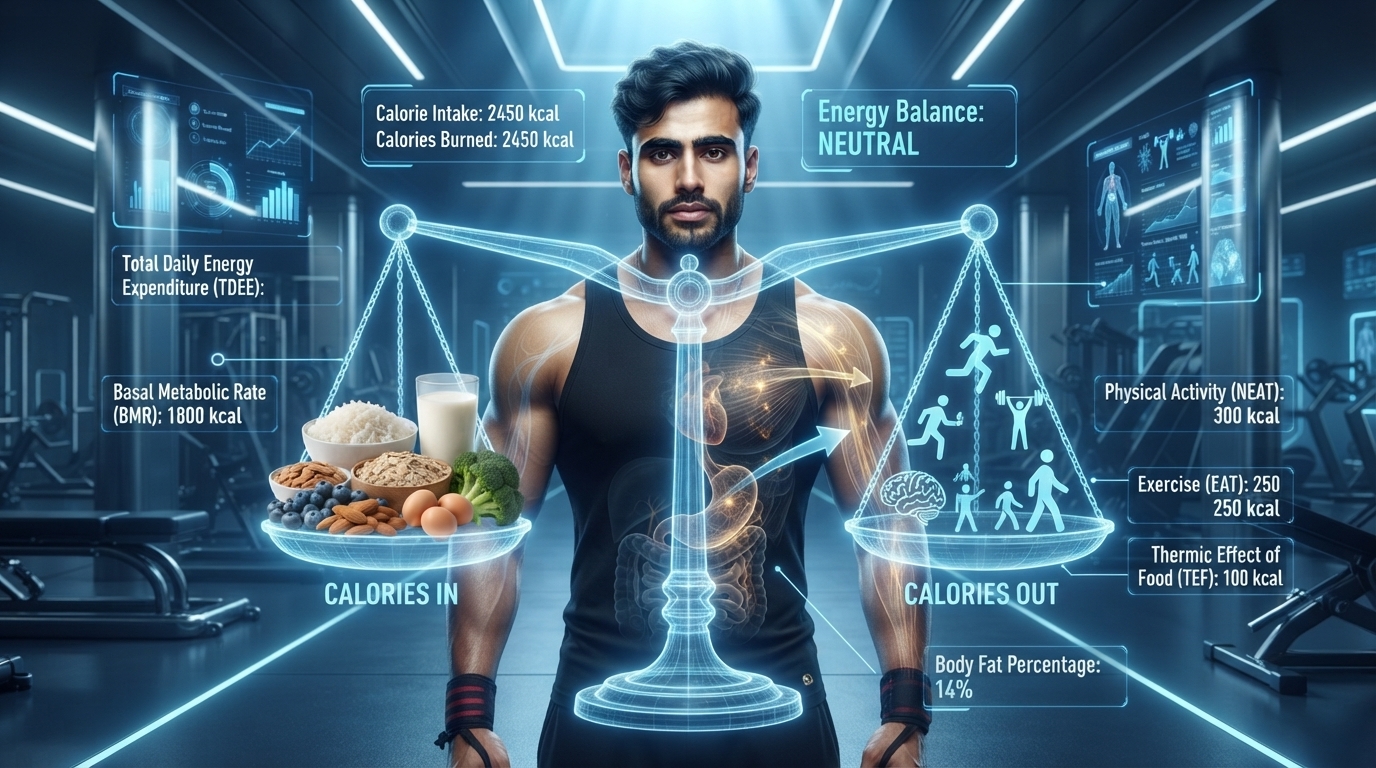
Energy balance is the foundation of fat loss. It describes the relationship between the calories you consume through food and the calories your body burns throughout the day.

Illustration showing calorie intake versus calorie expenditure.
Fat loss occurs when your body consistently burns more calories than it consumes, creating a calorie deficit.

Energy balance is the relationship between calories consumed and calories burned. Every day your body uses energy to support breathing, circulation, digestion, brain function, physical activity, and exercise. Whether you lose, maintain, or gain body fat depends largely on this balance over time.

When you consume fewer calories than your body needs, you create a calorie deficit. To compensate for the missing energy, your body begins breaking down stored fat and using it as fuel. Conversely, consistently eating more calories than you burn creates a calorie surplus, causing excess energy to be stored primarily as body fat.

Energy balance is influenced by many factors, including metabolism, physical activity, muscle mass, food choices, age, and lifestyle habits. While hormones and genetics can affect how easily fat is lost, maintaining a consistent calorie deficit remains the fundamental requirement for long-term fat loss.

Chapter 03

Understanding Metabolism

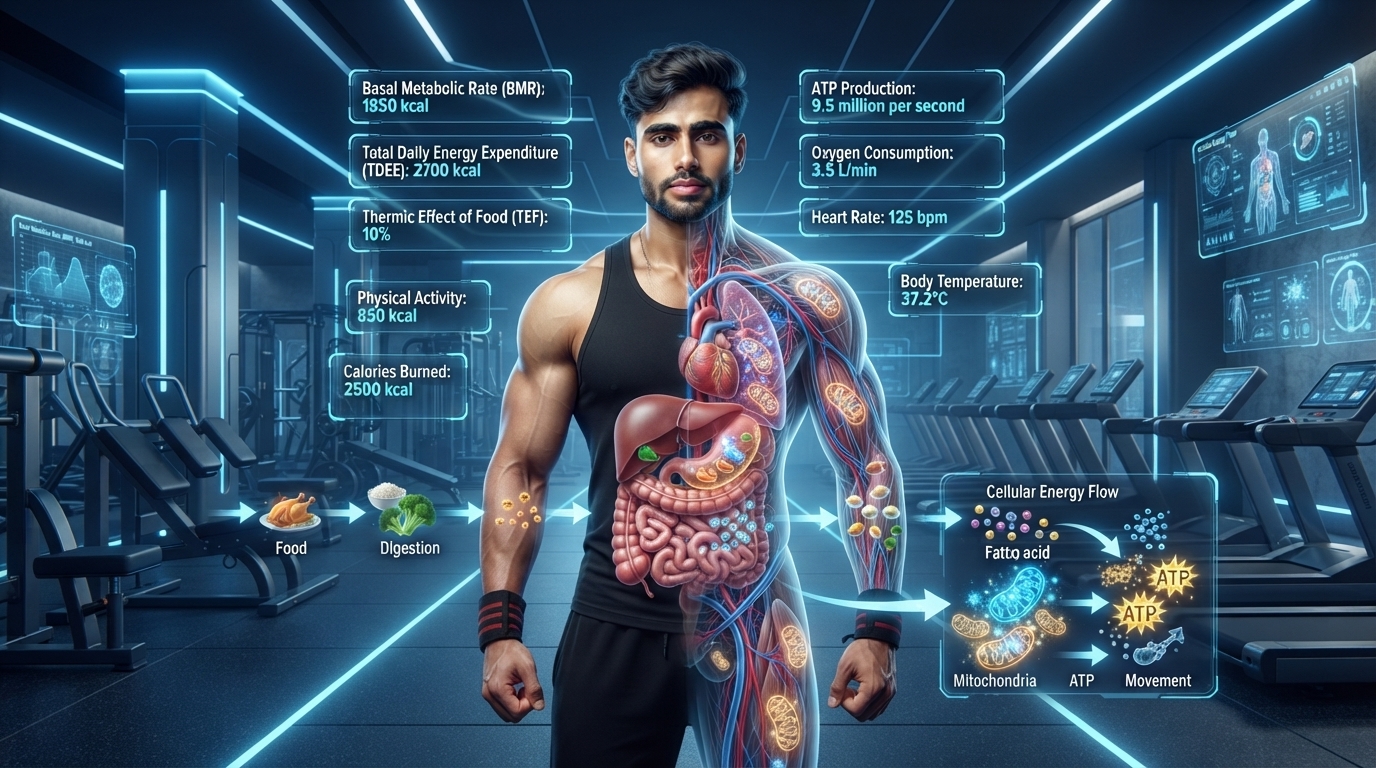
Metabolism is the collection of chemical processes that keep your body alive. It determines how your body converts food into energy and influences how many calories you burn every day.

Illustration showing metabolism converting food into energy.
Metabolism converts nutrients into usable energy that powers every cell, organ, and movement in your body.

Metabolism refers to all the chemical reactions that occur inside your body to produce and use energy. Every heartbeat, breath, muscle contraction, and brain signal depends on metabolic processes that continuously convert nutrients from food into fuel.

Your daily calorie expenditure consists of several components. The largest is your Basal Metabolic Rate (BMR), which represents the calories your body burns at rest to maintain essential functions such as breathing, circulation, body temperature, and organ activity. Additional calories are burned through physical activity, exercise, and the digestion of food, known as the Thermic Effect of Food (TEF).

Metabolism is influenced by age, body size, muscle mass, genetics, hormones, and activity level. While some people naturally burn slightly more calories than others, maintaining an active lifestyle, building muscle, and following healthy nutrition habits can help support a higher overall energy expenditure.

Chapter 04

Body Fat Storage & Lipolysis

Body fat serves as your body's primary energy reserve. Understanding how fat is stored and later broken down through lipolysis explains how your body fuels itself during a calorie deficit.

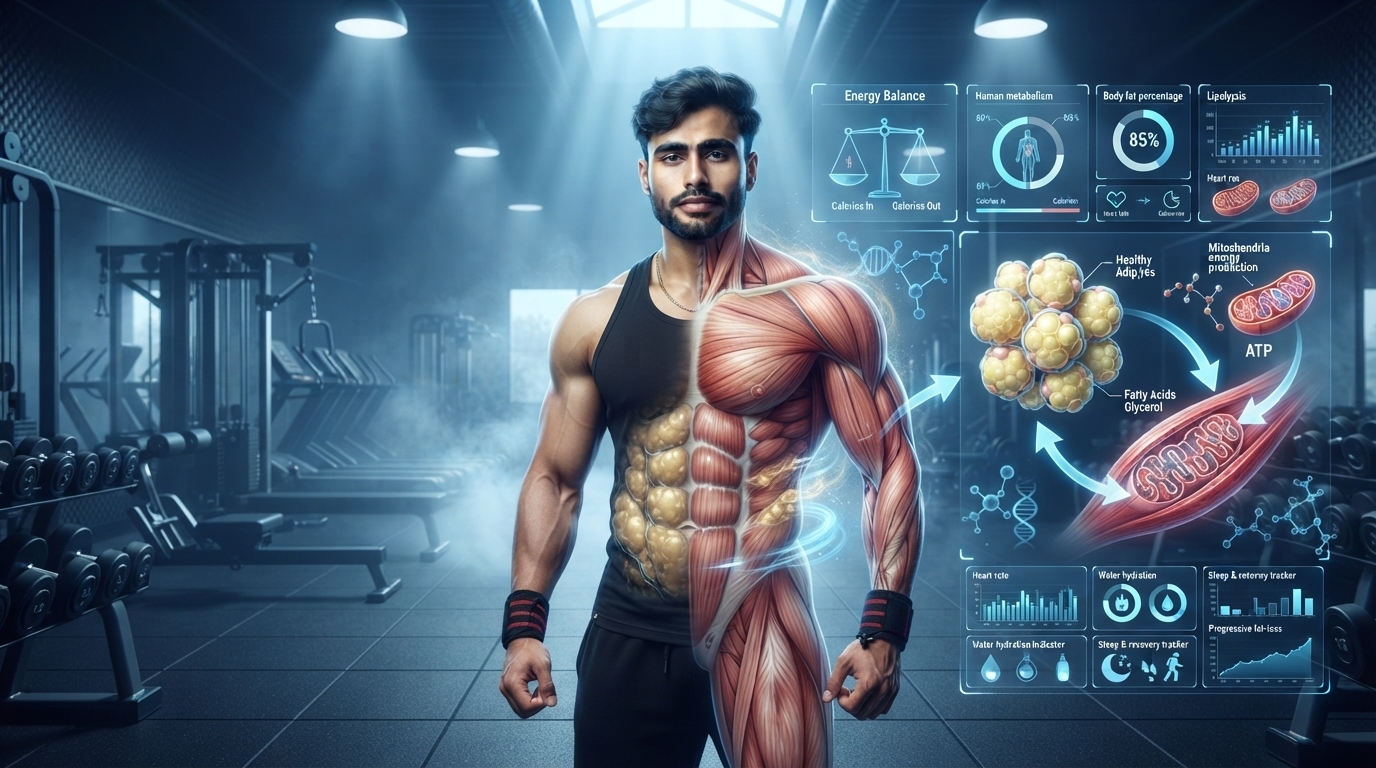
Illustration showing fat cells releasing stored fat through lipolysis.
During lipolysis, stored triglycerides inside fat cells are broken down into fatty acids and glycerol to provide energy.

Your body stores excess energy inside specialized fat cells called adipocytes. These cells store energy mainly as triglycerides, creating an energy reserve that can be used whenever calorie intake is lower than your body's energy requirements.

When you maintain a calorie deficit, hormones signal fat cells to begin lipolysis. During this process, triglycerides are broken down into fatty acids and glycerol. These fatty acids enter the bloodstream and travel to muscles and other tissues, where mitochondria convert them into ATP—the energy that powers movement and essential body functions.

Fat storage and fat breakdown occur continuously throughout the day. The balance between these two processes depends on your overall energy balance, physical activity, nutrition, hormone regulation, and long-term lifestyle habits. Consistently using more energy than you consume gradually reduces the amount of fat stored inside adipocytes.

Chapter 05

Calorie Deficit

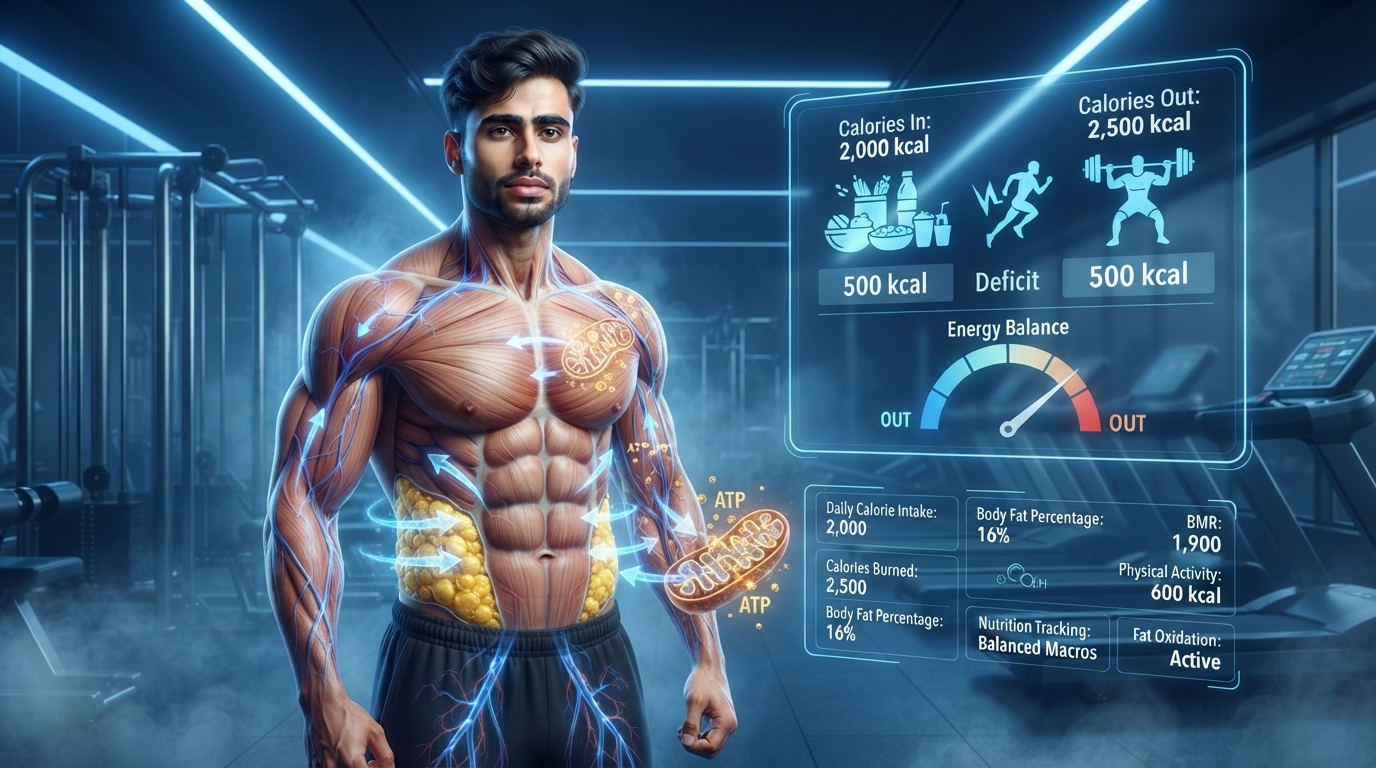
A calorie deficit is the foundation of fat loss. It occurs when you consistently consume fewer calories than your body burns, forcing it to use stored body fat as an energy source.

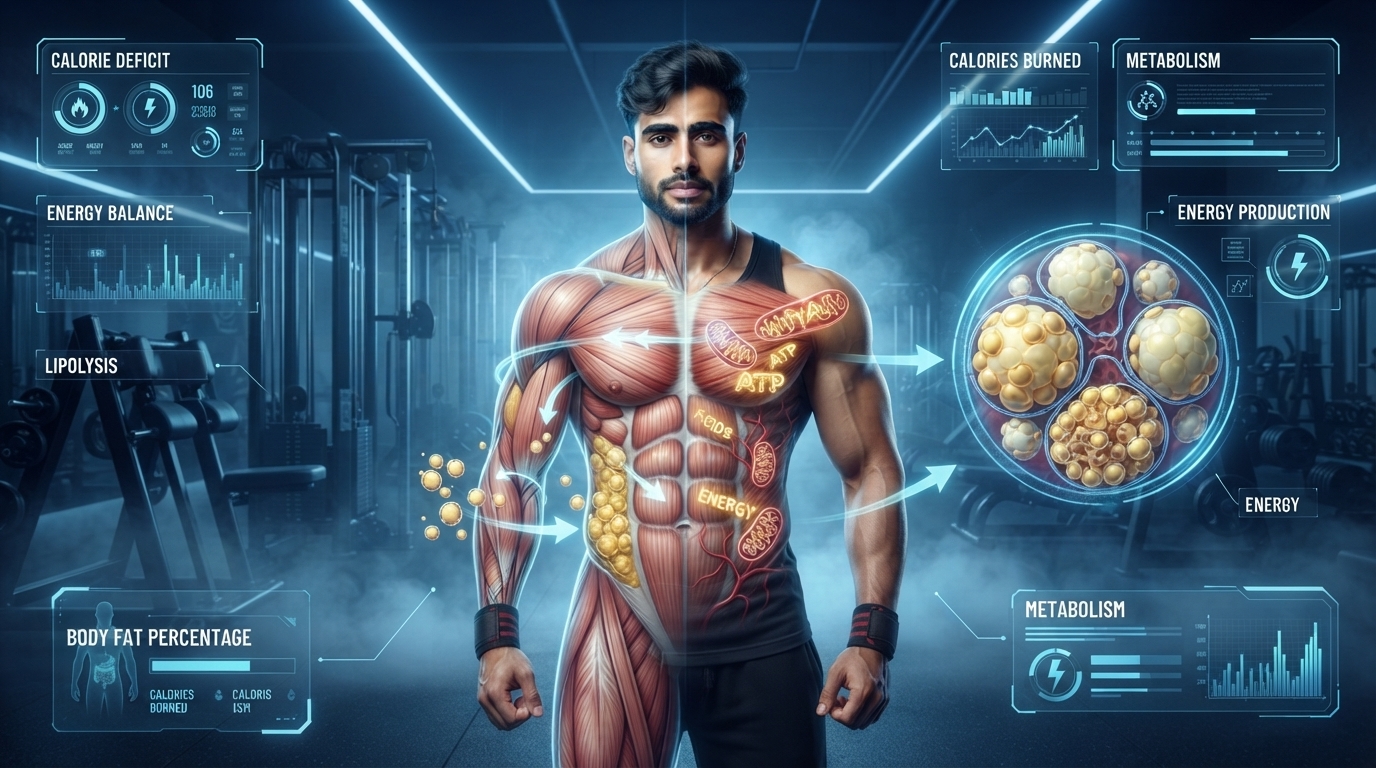
Illustration showing a calorie deficit leading to body fat being used for energy.
A sustained calorie deficit encourages the body to break down stored fat and convert it into usable energy.

A calorie deficit occurs when your daily energy intake is lower than your daily energy expenditure. Since your body still requires energy for essential functions and physical activity, it begins using stored body fat to make up the difference.

Creating a calorie deficit does not require extreme dieting or starving yourself. It can be achieved by eating slightly fewer calories, increasing physical activity, or combining both approaches. A moderate and consistent deficit is generally easier to maintain and helps preserve lean muscle mass while promoting steady fat loss.

The size of the calorie deficit influences the rate of fat loss. While very large deficits may produce faster short-term weight loss, they can also increase fatigue, muscle loss, hunger, and reduce long-term adherence. Sustainable fat loss is best achieved through balanced nutrition, regular exercise, adequate protein intake, and gradual lifestyle changes.

Chapter 06

Exercise for Fat Loss

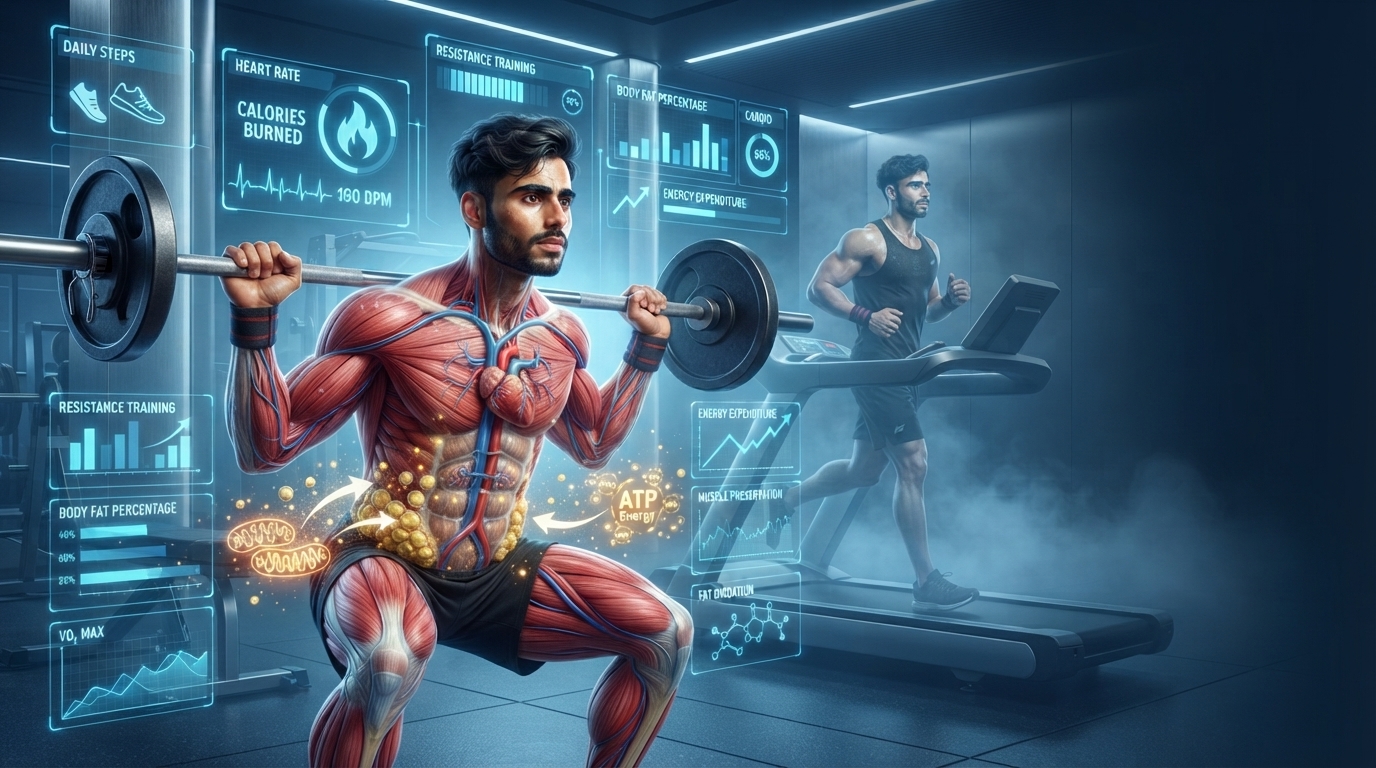
Exercise supports fat loss by increasing daily energy expenditure, improving cardiovascular fitness, preserving muscle mass, and helping maintain a sustainable calorie deficit over time.

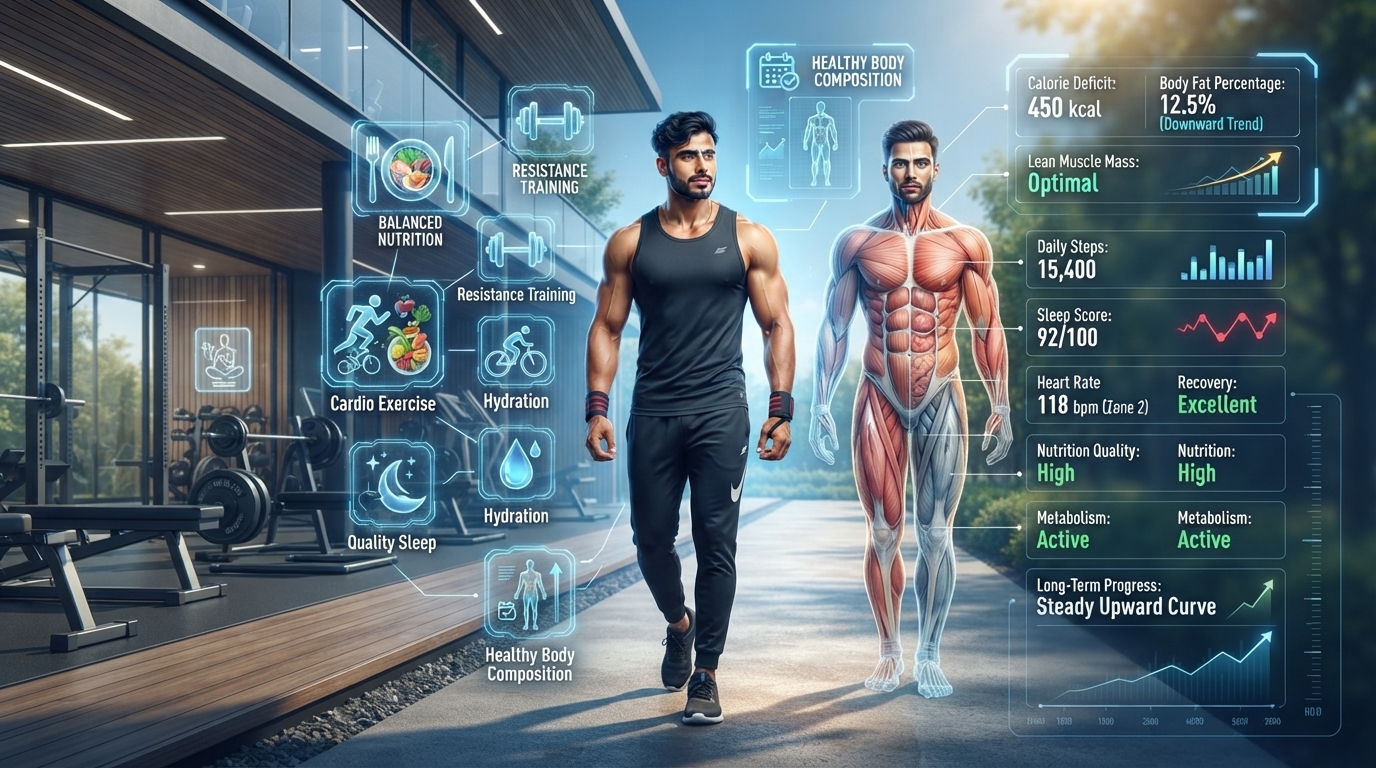
Illustration showing resistance training and cardio supporting fat loss.
Combining resistance training with cardiovascular exercise helps burn calories, preserve muscle, and improve long-term body composition.

Exercise plays a vital role in fat loss by increasing the number of calories your body burns each day. While nutrition creates the calorie deficit, regular physical activity makes it easier to maintain that deficit while improving strength, endurance, and overall health.

Resistance training helps preserve and build lean muscle during weight loss, preventing excessive muscle loss that often occurs with dieting alone. Maintaining muscle mass also supports a higher resting metabolic rate because muscle tissue requires more energy than fat tissue.

Cardiovascular exercise, such as walking, cycling, running, swimming, or rowing, increases calorie expenditure and improves heart health. Combining strength training with regular cardio, along with consistent daily movement, provides one of the most effective strategies for sustainable fat loss and improved body composition.

Chapter 07

Nutrition for Fat Loss

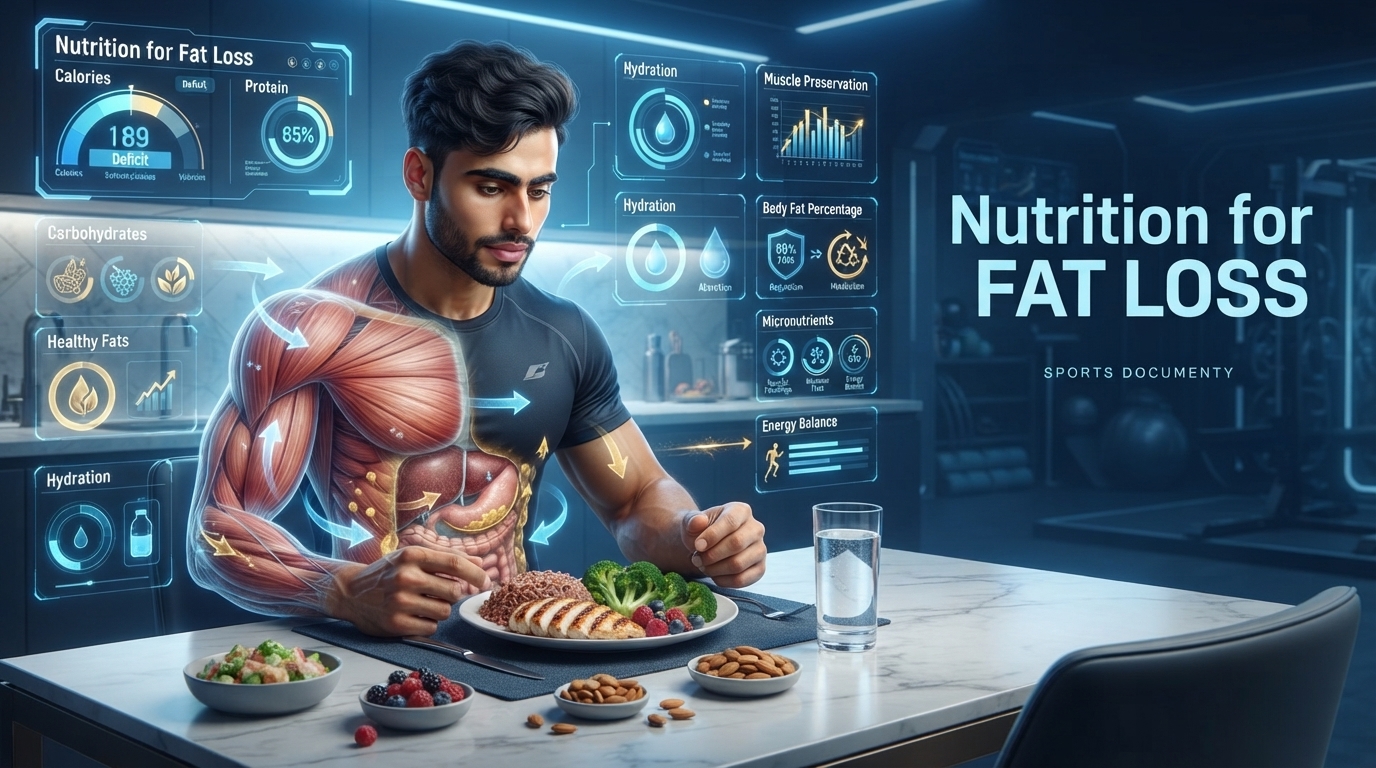
Nutrition is the most important factor in successful fat loss. A balanced diet that creates a sustainable calorie deficit while providing essential nutrients helps your body lose fat, preserve muscle, and maintain overall health.

Illustration showing balanced nutrition supporting healthy fat loss.
A nutrient-rich, calorie-controlled diet provides the energy and nutrients needed to support sustainable fat loss and muscle preservation.

Nutrition forms the foundation of every successful fat loss journey. While exercise helps increase calorie expenditure, your daily food choices largely determine whether you maintain the calorie deficit required to reduce body fat.

A balanced fat-loss diet should include adequate protein, complex carbohydrates, healthy fats, fiber-rich vegetables, fruits, and sufficient hydration. Protein is especially important because it helps preserve lean muscle mass, supports recovery, and increases feelings of fullness, making it easier to maintain a calorie deficit.

Sustainable fat loss does not require eliminating entire food groups or following extreme diets. Instead, focus on portion control, nutrient-dense foods, consistent eating habits, and long-term lifestyle changes that you can maintain while continuing to enjoy a varied and balanced diet.

Chapter 08

Sleep, Stress & Hormones

Sleep, stress, and hormones play a crucial role in fat loss. They influence appetite, energy expenditure, recovery, and food choices, making them just as important as diet and exercise for long-term success.

Illustration showing how sleep, stress, and hormones influence fat loss.
Quality sleep and effective stress management help regulate hormones that control appetite, metabolism, recovery, and body composition.

Fat loss is influenced by more than just calories. Sleep quality, chronic stress, and hormone regulation affect how hungry you feel, how much energy you burn, and how consistently you can maintain healthy eating and exercise habits.

During sleep, your body repairs tissues, restores energy, and regulates hormones involved in appetite and recovery. Poor sleep can increase hunger by disrupting hormones such as ghrelin and leptin, making it more difficult to control food intake and maintain a calorie deficit.

Chronic stress increases the release of cortisol, a hormone that can increase appetite, encourage overeating, and make healthy habits harder to sustain. Prioritizing quality sleep, managing stress through relaxation techniques or physical activity, and maintaining a consistent daily routine all support sustainable fat loss and overall health.

Chapter 09

Sustainable Fat Loss Strategies

Sustainable fat loss is achieved through consistent lifestyle habits rather than quick fixes. Building healthy routines allows you to lose body fat, maintain muscle, and keep the weight off long after your diet ends.

Illustration showing healthy lifestyle habits supporting sustainable fat loss.
Long-term fat loss comes from consistent healthy habits, balanced nutrition, regular exercise, quality sleep, and patience.

Successful fat loss is not about following extreme diets for a few weeks. It is about developing healthy habits that you can maintain for months and years. Small, consistent improvements often produce better long-term results than short periods of aggressive weight loss.

Sustainable strategies include maintaining a moderate calorie deficit, eating mostly whole and nutrient-dense foods, staying physically active, performing regular resistance training, getting enough sleep, managing stress, and monitoring progress without becoming obsessed with daily scale fluctuations. These habits work together to improve body composition while supporting overall health.

Weight loss is rarely perfectly linear. Temporary plateaus, water retention, and normal day-to-day weight changes are part of the process. Staying consistent with healthy behaviors, rather than chasing rapid results, is the most reliable way to achieve lasting fat loss and maintain your progress.

Chapter 10

Common Fat Loss Myths

Fat loss is surrounded by countless myths and misleading advice. Understanding what science actually says helps you avoid ineffective strategies and focus on habits that produce sustainable, long-term results.

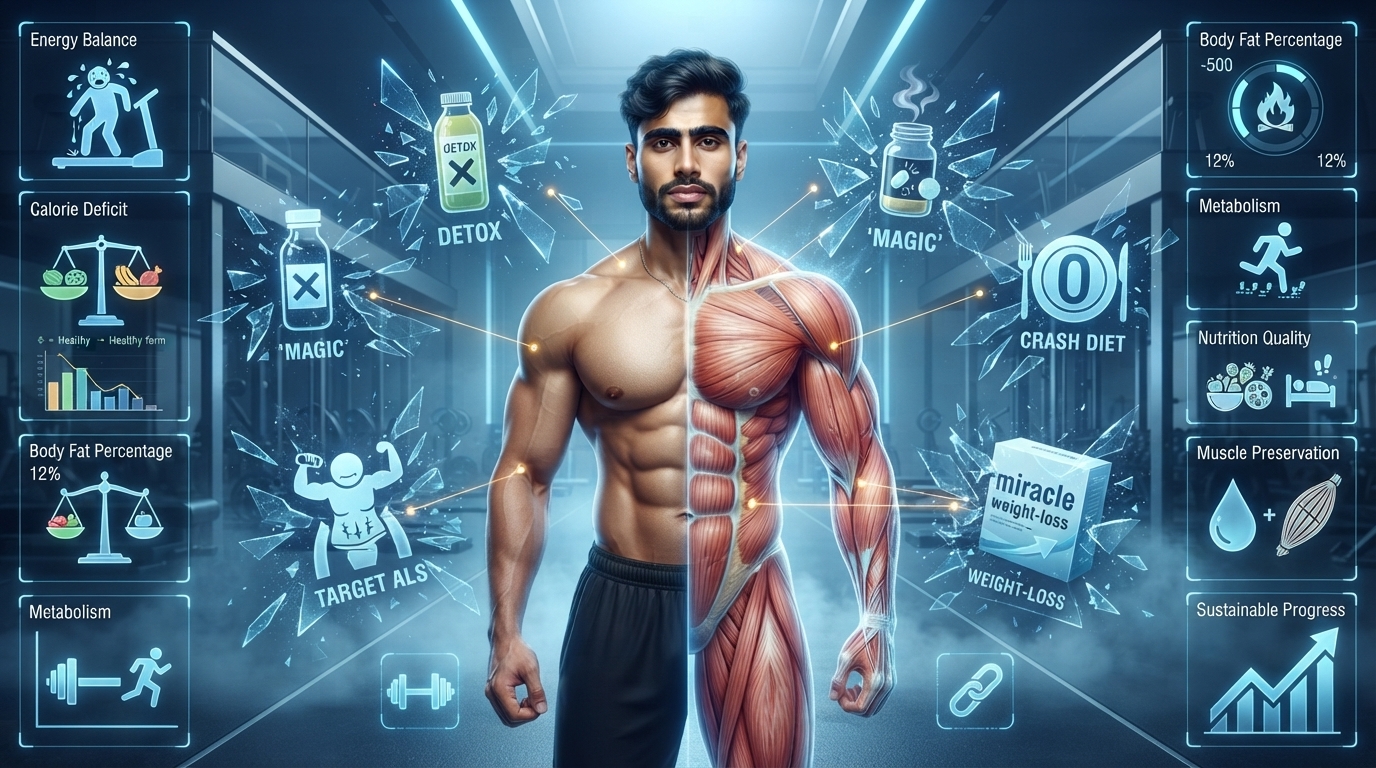
Illustration showing common fat loss myths replaced with evidence-based fitness science.
Evidence-based nutrition and exercise science separate common fat loss myths from strategies that truly improve body composition.

The internet is full of quick fixes, miracle diets, and fitness myths that promise rapid fat loss. While these claims are often appealing, most are not supported by scientific evidence and can make healthy weight management more difficult.

One of the most common myths is that specific exercises can burn fat from a particular body part. In reality, spot reduction is not supported by research. Your body decides where fat is stored and where it is lost based on genetics, hormones, and overall energy balance—not by exercising a single muscle group.

Another misconception is that eating very little or skipping meals is the fastest way to lose fat. Although a calorie deficit is required for fat loss, extremely restrictive diets are difficult to maintain and may increase fatigue, hunger, and the loss of lean muscle mass. A moderate calorie deficit combined with balanced nutrition and regular exercise is far more effective over the long term.

Many people also believe that supplements, detox drinks, or "fat-burning" products can replace healthy habits. While some products may have small effects, no supplement can overcome poor nutrition or a lack of physical activity. Sustainable fat loss comes from consistent eating habits, regular exercise, quality sleep, and patience.

Summary

Key Takeaways

Sustainable fat loss is achieved by understanding how your body uses energy, maintaining a calorie deficit, and building healthy habits that support long-term body composition and overall health.

Fat Loss Requires a Calorie Deficit

Your body loses fat when you consistently burn more calories than you consume, forcing it to use stored body fat as an energy source.

Metabolism Powers Energy Use

Your metabolism continuously converts food into energy, supporting every bodily function and influencing your daily calorie expenditure.

Exercise Helps Preserve Muscle

Resistance training combined with cardiovascular exercise increases calorie expenditure while helping maintain lean muscle during fat loss.

Nutrition Drives Results

Balanced meals rich in protein, whole foods, fiber, and healthy fats support fat loss, preserve muscle, and improve long-term adherence.

Recovery Supports Fat Loss

Quality sleep, stress management, and healthy hormone regulation improve appetite control, recovery, and consistency throughout your fat loss journey.

Trust Science, Not Myths

Sustainable fat loss comes from evidence-based nutrition, regular exercise, patience, and consistency—not detoxes, crash diets, or miracle supplements.

Frequently Asked Questions FAQs

Frequently Asked Questions

Find answers to the most common questions about fat loss, calorie deficits, metabolism, nutrition, exercise, and the science behind losing body fat safely and effectively.

01 What is fat loss?

Fat loss is the process of reducing stored body fat when your body consistently uses more energy than it receives from food. During a calorie deficit, stored fat is broken down and used as fuel to meet your body's energy needs.

02 What is a calorie deficit?

A calorie deficit occurs when you consume fewer calories than your body burns each day. This energy shortage encourages your body to use stored fat for fuel, making it the fundamental requirement for long-term fat loss.

03 Can I lose fat without exercising?

Yes. Fat loss is primarily driven by maintaining a calorie deficit. However, combining healthy nutrition with resistance training and cardiovascular exercise helps preserve muscle mass, improve fitness, and achieve better long-term body composition.

04 Can I lose fat from just one body part?

No. Spot reduction is not supported by scientific evidence. Your body determines where fat is stored and lost based on genetics, hormones, and overall energy balance rather than by exercising a specific area.

05 How much protein should I eat during fat loss?

Most physically active adults benefit from consuming approximately 1.2–2.0 grams of protein per kilogram of body weight per day. Adequate protein helps preserve lean muscle, supports recovery, and increases feelings of fullness while dieting.

06 Does sweating mean I'm burning more fat?

No. Sweating is your body's cooling mechanism and mainly reflects fluid loss, not fat loss. Body fat is reduced through a sustained calorie deficit, not by how much you sweat during exercise.

07 Are fat-burning supplements necessary?

No. Most fat-burning supplements provide little benefit compared with maintaining a calorie deficit, eating a balanced diet, exercising regularly, getting enough sleep, and staying physically active.

08 What is the healthiest way to lose body fat?

The healthiest approach is to maintain a moderate calorie deficit, eat a balanced nutrient-rich diet, perform regular resistance training and cardio, sleep well, manage stress, and stay consistent. Sustainable lifestyle habits are far more effective than crash diets or quick-fix solutions.

Continue Learning Continue Learning

Lose Fat with Science. Maintain It with Healthy Habits.

Sustainable fat loss isn't achieved through crash diets or quick fixes—it's built through a consistent calorie deficit, balanced nutrition, regular exercise, quality sleep, and healthy lifestyle habits. Apply the science you've learned to make informed decisions, improve your body composition, and create results that last. Explore more evidence-based fitness guides to continue your health and fitness journey.

"Sustainable fat loss begins with science and is achieved through consistency." — Atul Tomar Fitness