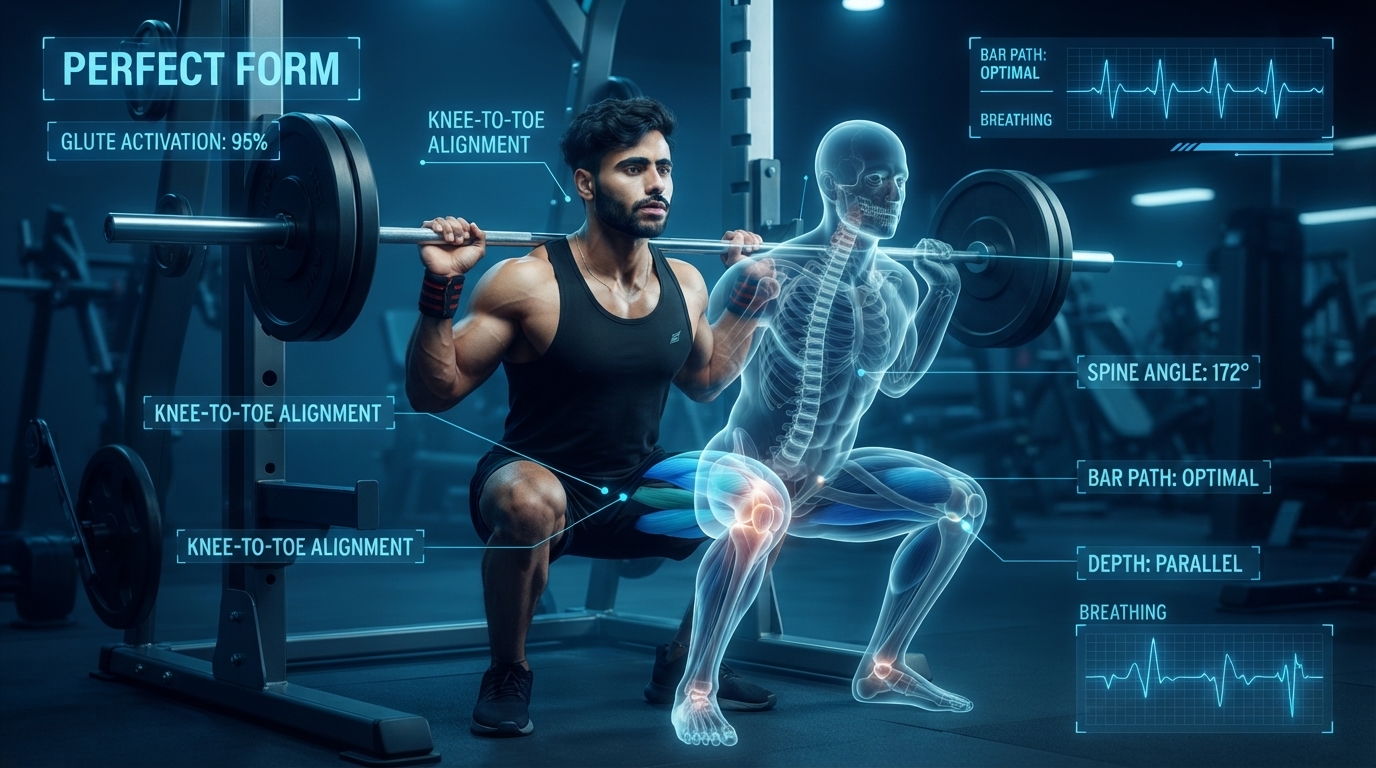
Evidence-Based Exercise Guide

Exercise Technique & Training

Master the science of proper exercise technique with this evidence-based guide. Learn correct movement patterns, biomechanics, range of motion, breathing, tempo, training volume, exercise selection, and injury prevention to perform every workout safely, efficiently, and with maximum results.

Exercise Technique and Training Guide

Proper Technique

Train Safely

Biomechanics

Move Efficiently

What You'll Learn

Master the complete science of exercise technique and training—from proper movement mechanics and biomechanics to breathing, exercise selection, training variables, and injury prevention for safer, more effective workouts.

20+ Learning Topics

Explore every essential concept, including exercise technique, biomechanics, movement patterns, range of motion, breathing, tempo, training volume, exercise selection, and recovery.

Science-Based Learning

Understand evidence-based exercise science with clear, practical explanations that help you perform every exercise safely, efficiently, and with proper technique.

Train Smarter & Safer

Learn how proper form, progressive training, recovery, and injury prevention work together to improve performance, build strength, and maximize long-term fitness results.

Complete Learning Roadmap

Follow this step-by-step guide to master the science of exercise technique and training—from movement mechanics and biomechanics to proper form, breathing, training variables, exercise selection, and injury prevention for safer, more effective workouts.

Why Understanding Exercise Technique Matters

Every exercise has a purpose, but performing it with proper technique determines how effective and safe it truly is. Exercise technique is more than simply moving a weight from one point to another—it involves proper body alignment, controlled movement, correct breathing, appropriate range of motion, and efficient force production. Mastering these fundamentals allows you to train more effectively while reducing unnecessary stress on your joints and connective tissues.

Whether your goal is building muscle, increasing strength, losing fat, improving athletic performance, or maintaining long-term health, proper exercise technique forms the foundation of every successful training program. Good movement mechanics help target the intended muscles, improve exercise efficiency, enhance performance, and significantly reduce the risk of preventable training injuries caused by poor form or excessive loading.

Throughout this guide, you'll explore the complete science of exercise technique—from biomechanics and movement patterns to breathing, bracing, range of motion, training variables, exercise selection, and injury prevention. By understanding how your body should move during resistance training, you'll build safer habits, maximize every repetition, and develop the confidence to train correctly for years to come.


Chapter 01

What is Exercise Technique?

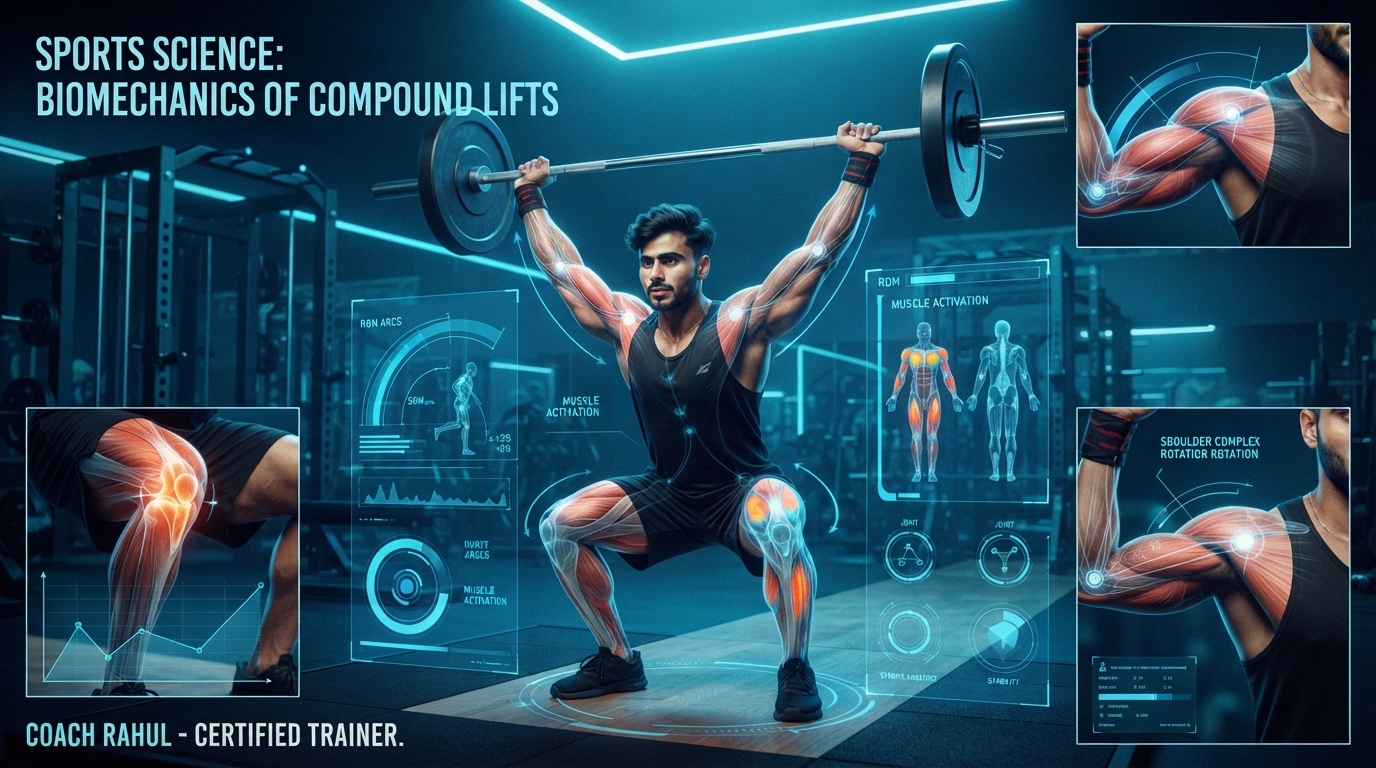
Exercise technique is the correct way to perform a movement safely and effectively. Proper technique combines body alignment, controlled movement, breathing, and biomechanics to maximize results while minimizing injury risk.

Illustration demonstrating proper exercise technique and body alignment during resistance training.
Proper exercise technique improves performance, targets the intended muscles, and helps reduce unnecessary stress on joints.

Exercise technique refers to performing every movement with proper posture, joint alignment, controlled motion, and correct breathing. Good technique ensures that the intended muscles produce the movement efficiently while minimizing unnecessary stress on bones, joints, ligaments, and connective tissues.

Every exercise follows specific biomechanical principles that determine how your body should move. Whether you're performing a squat, bench press, deadlift, push-up, or biceps curl, maintaining proper alignment and controlling each repetition allows muscles to generate force efficiently while reducing compensatory movements that may increase injury risk.

Proper exercise technique benefits people of every fitness level. Beginners develop safe movement patterns from the start, while experienced lifters improve muscle activation, strength, training efficiency, and long-term performance. Regardless of your goal—building muscle, increasing strength, losing fat, or improving athletic performance—mastering technique should always come before increasing weight or training intensity.

Chapter 02

Movement Patterns & Biomechanics

Every exercise follows specific movement patterns and biomechanical principles. Understanding how your body is designed to move helps improve exercise performance, maximize muscle activation, and reduce the risk of injury.

Illustration showing fundamental movement patterns and biomechanics during resistance training.
Proper movement patterns and biomechanics improve exercise efficiency while minimizing unnecessary stress on muscles and joints.

Human movement is built upon several fundamental movement patterns, including pushing, pulling, squatting, hinging, lunging, rotating, and carrying. Nearly every resistance exercise is based on one or more of these patterns, making them the foundation of effective strength training and athletic performance.

Biomechanics is the science of how forces interact with the human body during movement. It examines joint motion, muscle function, leverage, stability, and force production to explain why proper technique is important. When exercises are performed with correct biomechanics, muscles work more efficiently while unnecessary stress on joints, ligaments, and tendons is reduced.

Developing good movement patterns improves posture, balance, coordination, mobility, and overall exercise quality. Whether you're performing a squat, deadlift, bench press, pull-up, or overhead press, understanding how your body should move allows you to train safely, lift more efficiently, and achieve better long-term results.

Chapter 03

Range of Motion (ROM)

Range of Motion (ROM) describes how far a joint moves during an exercise. Performing movements through an appropriate range of motion improves muscle activation, joint mobility, exercise effectiveness, and overall movement quality.

Illustration demonstrating full range of motion during a resistance training exercise.
Using an appropriate range of motion helps maximize muscle engagement while promoting healthy joint function.

Range of Motion (ROM) refers to the distance and direction a joint can move during an exercise. Every repetition should be performed through an appropriate range that allows the target muscles to work effectively while maintaining proper technique, stability, and control.

In resistance training, a full range of motion generally allows muscles to lengthen and shorten completely, improving muscle activation, strength development, flexibility, and overall movement quality. While partial repetitions can be useful in specific training situations, they should not replace full-range movements for most exercises and individuals.

The ideal range of motion depends on the exercise, your mobility, training goals, and any existing injuries or limitations. Maintaining controlled movement throughout the entire repetition is more important than forcing excessive depth or sacrificing technique. Good mobility, flexibility, and joint stability work together to produce safe and efficient movement.

Chapter 04

Breathing & Bracing

Proper breathing and core bracing improve stability, increase force production, and help protect your spine during resistance training. Learning when to breathe and how to brace is essential for safe and effective exercise performance.

Illustration showing proper breathing and core bracing during a squat.
Coordinated breathing and core bracing stabilize the spine, improve lifting performance, and reduce unnecessary stress during exercise.

Breathing and bracing are fundamental components of proper exercise technique. Coordinating your breathing with each repetition while creating a stable core helps maintain spinal alignment, improve force transfer, and enhance overall movement efficiency during resistance training.

For most exercises, you should inhale during the lowering (eccentric) phase and exhale during the lifting (concentric) phase. During heavier compound movements such as squats, deadlifts, and overhead presses, many lifters also perform core bracing by tightening the abdominal and trunk muscles to increase intra-abdominal pressure and stabilize the spine before initiating the lift.

Proper bracing does not mean holding your breath throughout the entire exercise. Instead, it involves creating controlled abdominal tension while maintaining normal breathing patterns appropriate for the movement and training intensity. Mastering breathing and bracing improves lifting mechanics, enhances balance, and reduces unnecessary stress on the lower back during demanding exercises.

Chapter 05

Tempo & Repetition Speed

Tempo refers to the speed at which you perform each phase of an exercise. Controlling repetition speed improves muscle activation, movement quality, technique, and overall training effectiveness.

Illustration showing controlled exercise tempo during a resistance training repetition.
Controlling every phase of a repetition improves technique, increases muscle engagement, and enhances training quality.

Exercise tempo describes how quickly or slowly you perform each repetition. Every repetition consists of several phases—including lowering the weight (eccentric), pausing when appropriate, lifting the weight (concentric), and sometimes a brief pause before beginning the next repetition. Controlling these phases improves movement quality and helps the target muscles perform the work instead of relying on momentum.

A controlled tempo increases time under tension (TUT), which refers to the amount of time a muscle remains actively working during a set. Slowing the eccentric phase often improves muscle control, enhances technique, and allows better awareness of body position throughout the movement. While repetition speed may vary depending on the exercise and training goal, maintaining smooth, deliberate movement is generally more effective than rushing through repetitions.

Explosive movements have an important place in athletic training and power development, but they should still be performed with proper technique and full control. Regardless of whether your goal is strength, muscle growth, endurance, or general fitness, maintaining an appropriate tempo helps maximize exercise quality while reducing unnecessary stress caused by uncontrolled movement.

Chapter 06

Training Volume, Intensity & Frequency

Training volume, intensity, and frequency are three essential variables that determine how your body adapts to exercise. Balancing these factors helps maximize strength, muscle growth, performance, and recovery while reducing the risk of overtraining.

Illustration showing training volume, intensity, and workout frequency in resistance training.
Optimizing training volume, intensity, and frequency helps produce consistent progress while allowing adequate recovery.

Effective training is not just about lifting heavier weights or exercising more often. Long-term progress depends on balancing three key training variables: volume, intensity, and frequency. Together, these determine how much stress your muscles experience and how well your body adapts over time.

Training volume refers to the total amount of work performed, usually measured by the number of sets, repetitions, and exercises completed during a workout. Training intensity describes how challenging the exercise is, often influenced by the amount of weight lifted or the effort required. Training frequency indicates how often a muscle group or movement pattern is trained throughout the week.

The ideal combination of these variables depends on your experience level, goals, recovery capacity, and overall training program. Increasing volume, intensity, or frequency too quickly without adequate recovery can reduce performance and increase injury risk. Progressive overload combined with proper recovery is the key to sustainable improvements in strength, muscle development, and fitness.

Chapter 07

Exercise Selection

Choosing the right exercises is essential for achieving your fitness goals safely and efficiently. Effective exercise selection considers your experience level, movement ability, training goals, equipment availability, and overall program design.

Illustration showing appropriate exercise selection for different fitness goals.
Selecting exercises that match your goals and abilities leads to safer training, better technique, and more consistent progress.

Exercise selection is the process of choosing movements that best support your individual fitness goals while matching your current strength, mobility, and technical ability. The right exercises help you train efficiently, target the intended muscles, and build a balanced, sustainable workout routine.

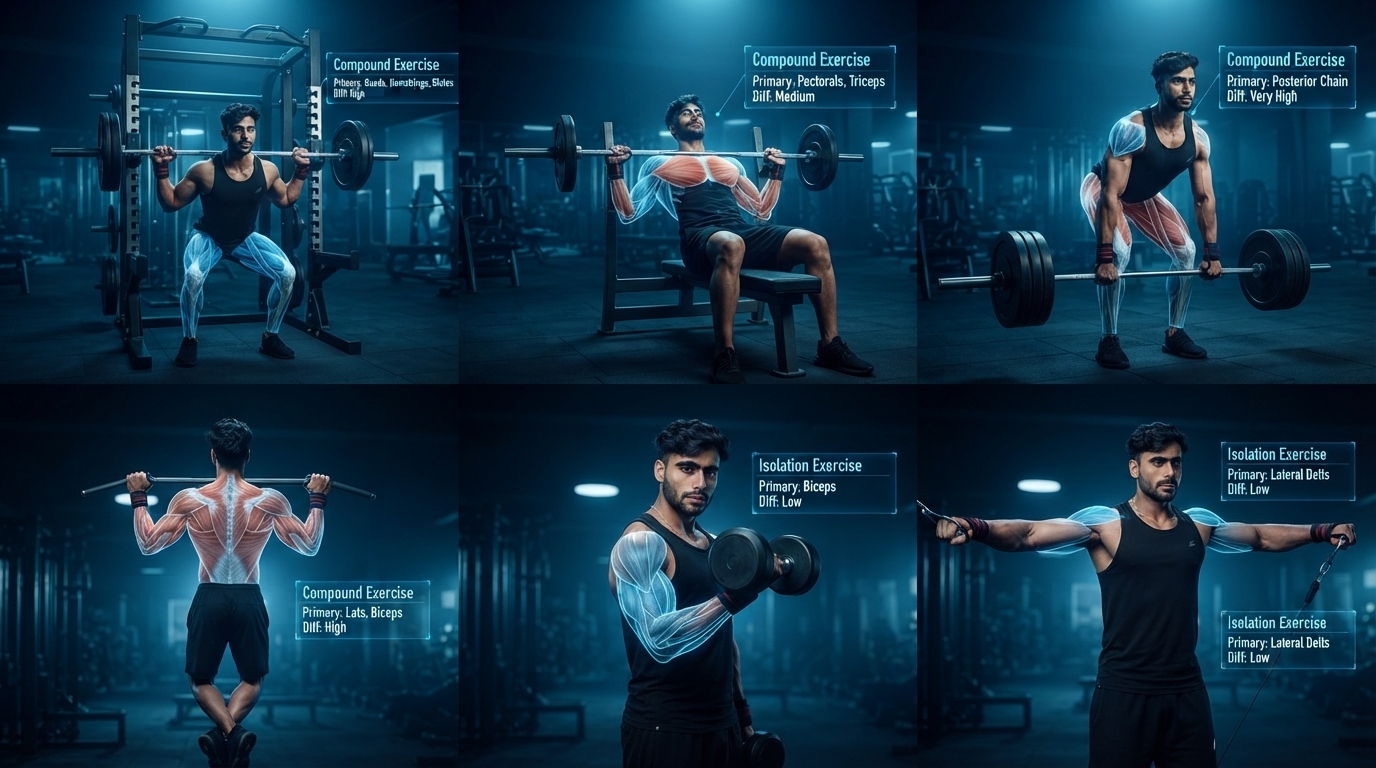
Compound exercises such as squats, deadlifts, bench presses, rows, and overhead presses involve multiple joints and muscle groups, making them highly effective for developing strength and overall fitness. Isolation exercises, such as biceps curls, triceps extensions, and leg extensions, target specific muscles and are valuable for correcting imbalances, improving muscle development, or supporting rehabilitation.

No single exercise is universally "best" for everyone. Factors such as previous injuries, mobility limitations, available equipment, sport-specific demands, and personal preferences all influence which exercises are most appropriate. Selecting movements that you can perform with proper technique is more beneficial than choosing advanced exercises beyond your current ability.

Chapter 08

Rest Periods & Recovery Between Sets

Rest periods between sets allow your muscles, nervous system, and energy stores to recover before the next effort. Choosing appropriate recovery times helps maintain exercise quality, improve performance, and support your specific training goals.

Illustration showing an athlete resting between resistance training sets.
Appropriate rest between sets helps restore energy, maintain proper technique, and improve overall workout performance.

Recovery between sets is an essential part of effective resistance training. During rest, your muscles partially restore energy, your heart rate begins to recover, and your nervous system prepares for the next repetition or set. Adequate recovery allows you to maintain proper technique and produce consistent performance throughout your workout.

The ideal rest period depends on your training objective and the type of exercise being performed. Heavy compound lifts that require high force production generally benefit from longer recovery periods, while lighter isolation exercises or muscular endurance training often use shorter rests. Regardless of the duration, recovery should be long enough to allow controlled, high-quality repetitions without unnecessary fatigue compromising technique.

Recovery extends beyond the time between sets. Sleep, nutrition, hydration, and overall workload all influence how well your body recovers between workouts. Managing both short-term and long-term recovery helps reduce injury risk, improve performance, and support steady progress over time.

Chapter 09

Common Exercise Technique Mistakes

Even experienced lifters can develop poor movement habits over time. Identifying and correcting common exercise technique mistakes improves performance, enhances muscle activation, and significantly reduces the risk of training-related injuries.

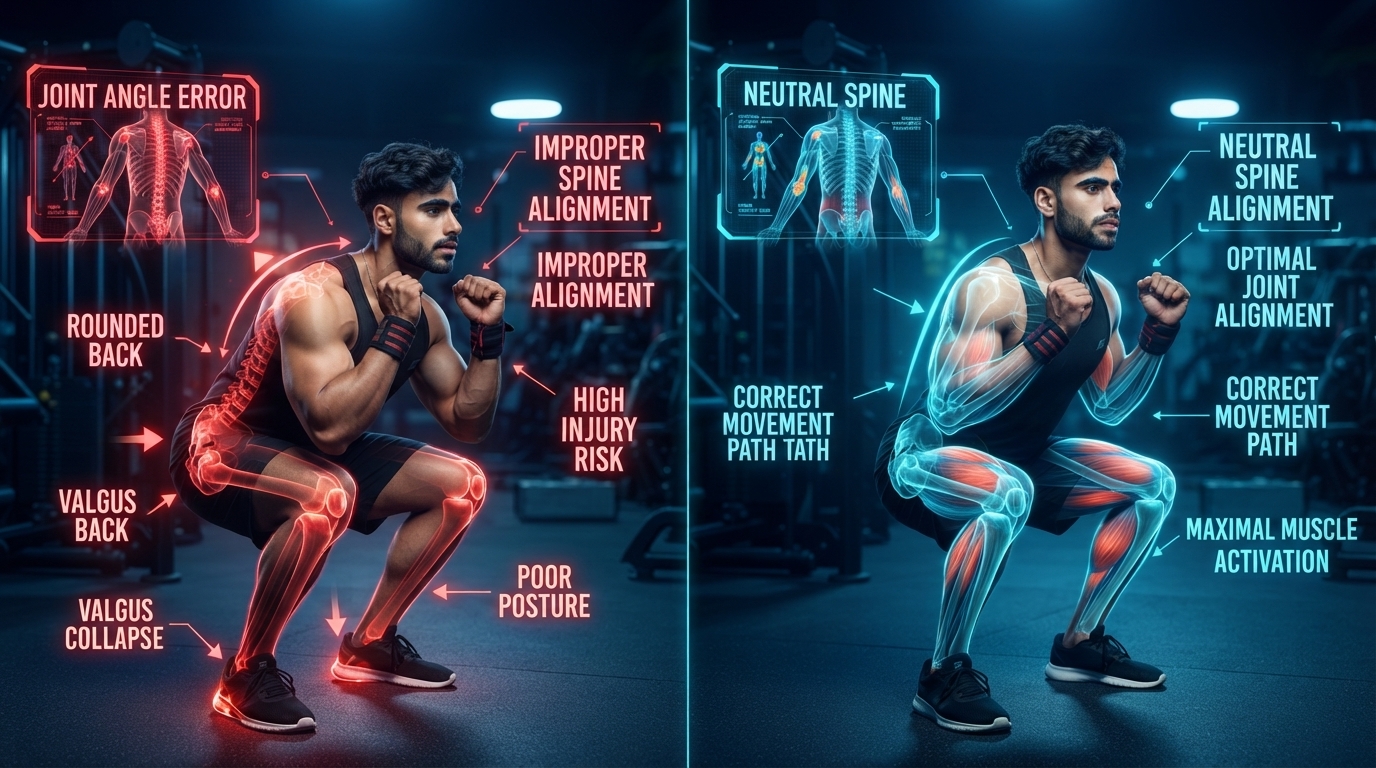
Illustration comparing incorrect and correct exercise technique during resistance training.
Correcting common movement errors improves exercise quality, muscle engagement, and long-term training safety.

Proper exercise technique requires continuous attention to posture, movement quality, and body control. Common mistakes such as using excessive momentum, lifting weights that are too heavy, shortening the range of motion, or neglecting proper breathing can reduce exercise effectiveness and place unnecessary stress on muscles, joints, and connective tissues.

Technical errors often develop when fatigue increases or when the focus shifts from movement quality to lifting heavier weights. Rounded backs during deadlifts, knees collapsing inward during squats, incomplete repetitions, excessive swinging during curls, and poor shoulder positioning during pressing exercises are all examples of mistakes that can affect both performance and safety.

The most effective way to improve technique is to prioritize controlled repetitions, appropriate resistance, and consistent practice. Recording your lifts, seeking qualified coaching, and mastering fundamental movement patterns before progressing to heavier loads help reinforce safe and efficient training habits for long-term success.

Chapter 10

Training Safety & Injury Prevention

Safe training is built on proper technique, gradual progression, and consistent recovery. Following evidence-based injury prevention principles helps you train effectively, reduce unnecessary risk, and maintain long-term fitness progress.

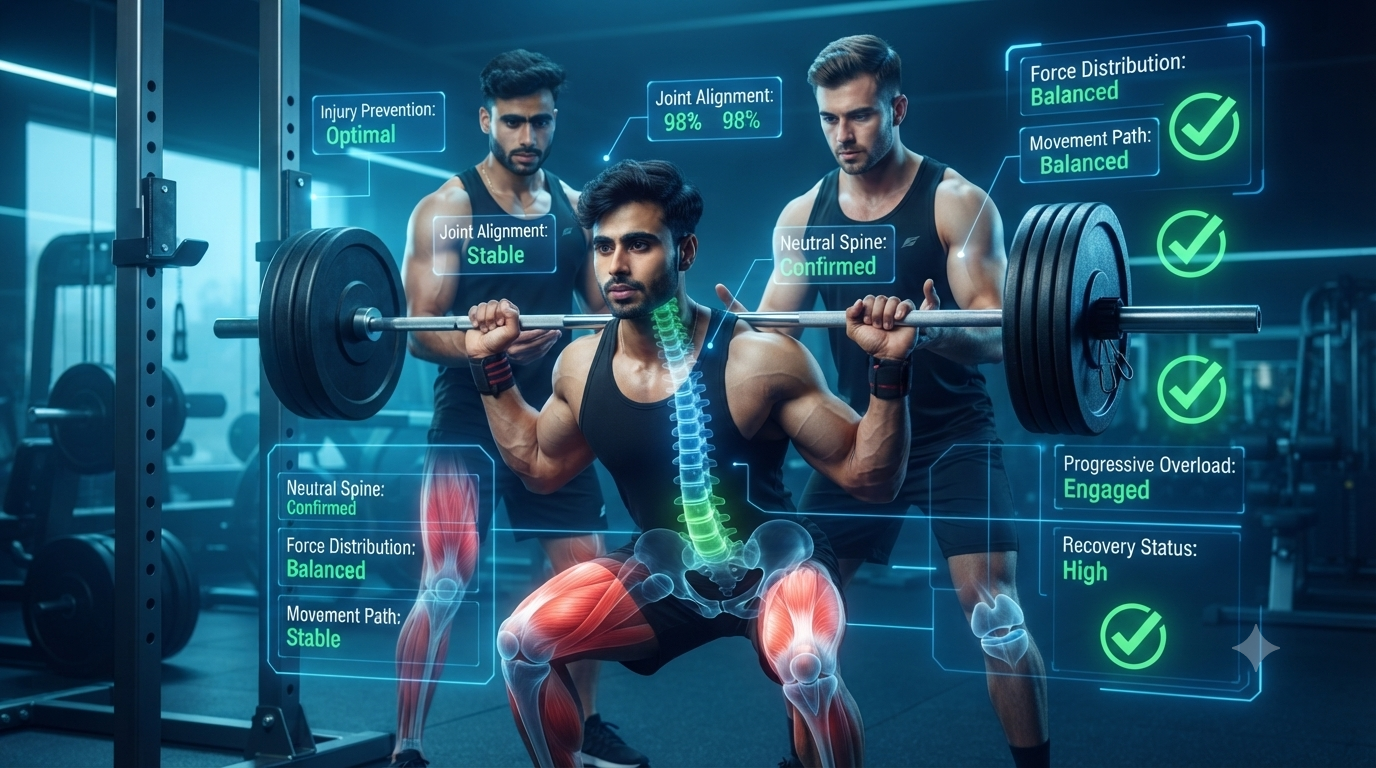
Illustration showing proper exercise technique and injury prevention during strength training.
Proper technique, appropriate loading, and adequate recovery create a safer training environment and support long-term performance.

Injury prevention begins long before lifting a heavy weight. Performing exercises with proper technique, selecting appropriate resistance, warming up effectively, and progressing gradually all help reduce unnecessary stress on muscles, joints, tendons, and ligaments while improving overall training quality.

Many exercise-related injuries occur when technique deteriorates because of excessive weight, fatigue, poor mobility, or rushing through repetitions. Learning correct movement patterns, maintaining controlled repetitions, and respecting your current ability allow your body to adapt safely while building strength and confidence over time.

Recovery is equally important for injury prevention. Adequate sleep, balanced nutrition, hydration, and scheduled rest days allow muscles and connective tissues to repair between training sessions. Paying attention to persistent pain, unusual discomfort, or declining performance can help identify potential problems before they become more serious and interrupt long-term progress.

Summary

Key Takeaways

Mastering proper exercise technique improves safety, performance, muscle activation, and long-term progress. Consistent attention to movement quality, recovery, and training fundamentals builds a strong foundation for every fitness goal.

Master Proper Technique First

Correct posture, body alignment, and controlled movement should always come before increasing weight, speed, or exercise difficulty.

Move With Purpose

Proper biomechanics, full range of motion, and controlled tempo improve muscle activation while reducing unnecessary stress on joints and connective tissues.

Train Smarter, Not Harder

Balance training volume, intensity, and frequency to promote continuous progress while giving your body enough time to recover and adapt.

Breathe & Brace Correctly

Coordinated breathing and proper core bracing stabilize the spine, improve lifting efficiency, and enhance control during every repetition.

Recovery Is Part of Training

Appropriate rest between sets, quality sleep, hydration, and nutrition allow muscles and the nervous system to recover for consistent long-term performance.

Prioritize Safety Every Session

Gradual progression, proper warm-ups, excellent technique, and listening to your body are the foundations of injury prevention and lifelong training success.

Frequently Asked Questions FAQs

Frequently Asked Questions

Find answers to the most common questions about exercise technique, biomechanics, breathing, range of motion, training variables, recovery, and injury prevention.

01 Why is proper exercise technique important?

Proper exercise technique helps target the intended muscles, improves movement efficiency, enhances performance, and reduces unnecessary stress on joints, muscles, and connective tissues. Good technique also lowers the risk of preventable training injuries.

02 What is range of motion (ROM)?

Range of motion (ROM) is the distance a joint moves during an exercise. Performing movements through an appropriate ROM generally improves muscle activation, mobility, strength development, and overall movement quality while maintaining safe technique.

03 Should I lift heavier weights if my technique breaks down?

No. If your technique deteriorates, reduce the weight and regain proper movement control before progressing again. Consistent, high-quality repetitions are more effective and safer than lifting excessive weight with poor form.

04 When should I breathe during an exercise?

For most resistance exercises, inhale during the lowering (eccentric) phase and exhale during the lifting (concentric) phase. Heavy compound lifts also benefit from proper core bracing to improve spinal stability and force production.

05 How long should I rest between sets?

The ideal rest period depends on your training goal and exercise. Heavy compound lifts generally require longer recovery than lighter isolation or endurance-focused exercises. Rest long enough to maintain proper technique and high-quality performance on the next set.

06 Is a slow repetition always better?

Not always. The ideal repetition speed depends on your training objective. However, every repetition should remain controlled, allowing the target muscles to perform the work instead of relying on momentum.

07 Which exercises should beginners prioritize?

Beginners should first master fundamental movement patterns such as squats, hinges, pushes, pulls, lunges, and carries using manageable resistance. Building good technique early creates a strong foundation for future strength and muscle development.

08 How can I reduce my risk of injury while training?

Warm up before every workout, use proper exercise technique, progress gradually, recover adequately, and stop if you experience sharp or unusual pain. Consistency, patience, and good movement mechanics are the foundations of safe long-term training.

Continue Learning Continue Learning

Master Your Technique. Build Strength That Lasts.

Great results begin with great movement. By applying proper exercise technique, understanding biomechanics, controlling range of motion, breathing correctly, and balancing training with recovery, you can improve performance while reducing injury risk. Keep building your knowledge with evidence-based fitness education and develop the confidence to train safely, effectively, and consistently for years to come.

"Perfect your movement first, and strength will follow." — Atul Tomar Fitness