₹100 Muscle Gain Diet Plan: High-Protein Indian Diet on a Budget

Think building muscle requires expensive supplements and costly meals? Think again. Discover a complete ₹100 muscle gain diet plan packed with affordable Indian high-protein foods, practical meal ideas, and science-backed nutrition strategies to help you build muscle without stretching your budget.

Science-Based Budget Friendly Beginner Friendly

In This Guide You'll Learn

  • Can you really build muscle on just ₹100 per day?
  • The best affordable Indian high-protein foods for muscle gain
  • A complete ₹100 daily meal plan with protein breakdown
  • Smart tips to maximize muscle growth while keeping costs low
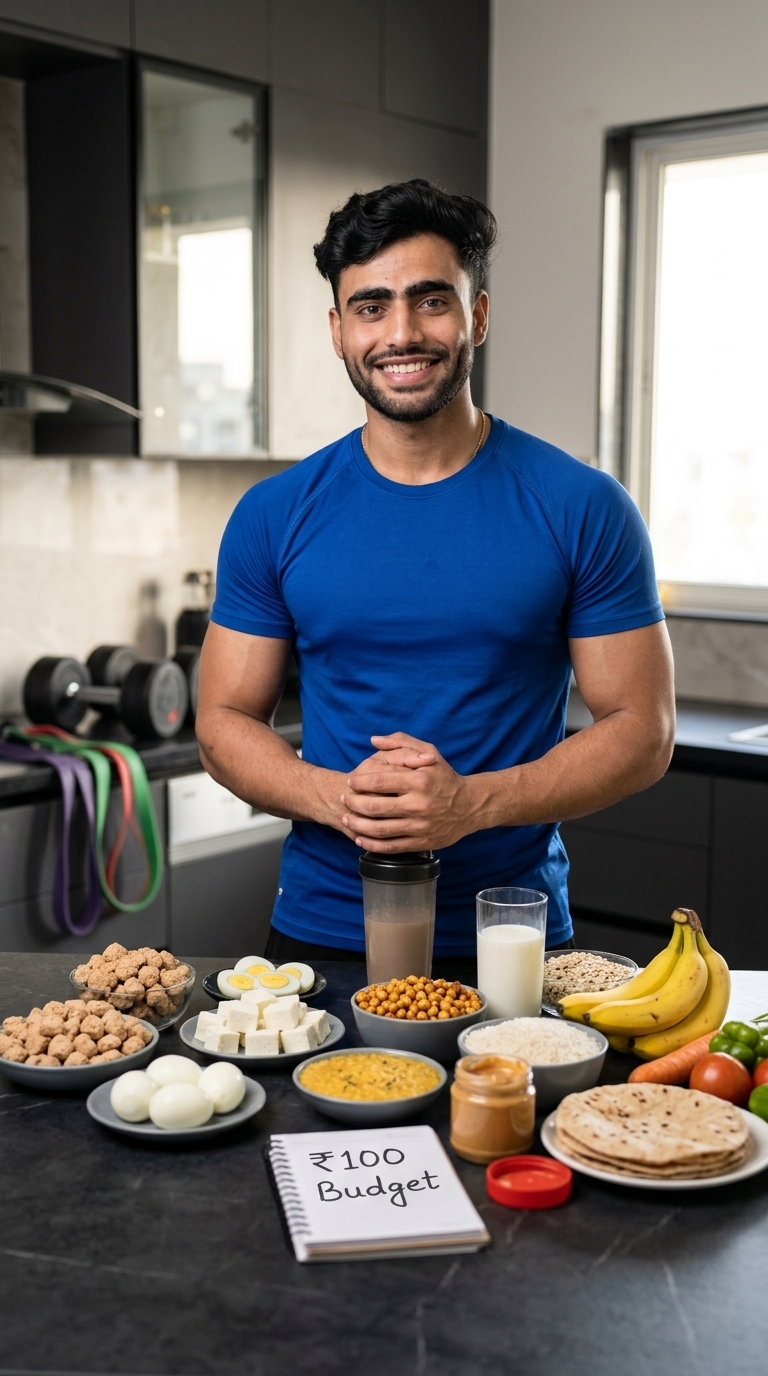
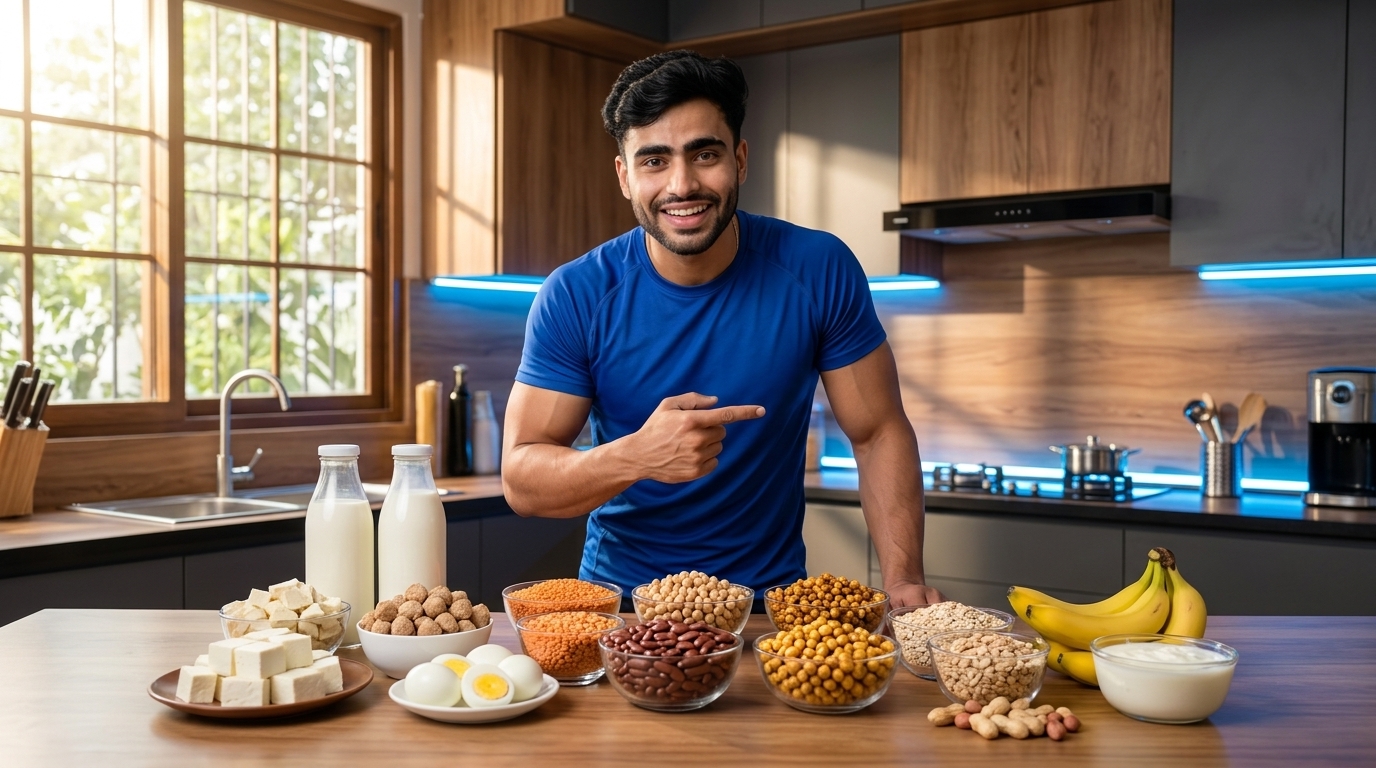
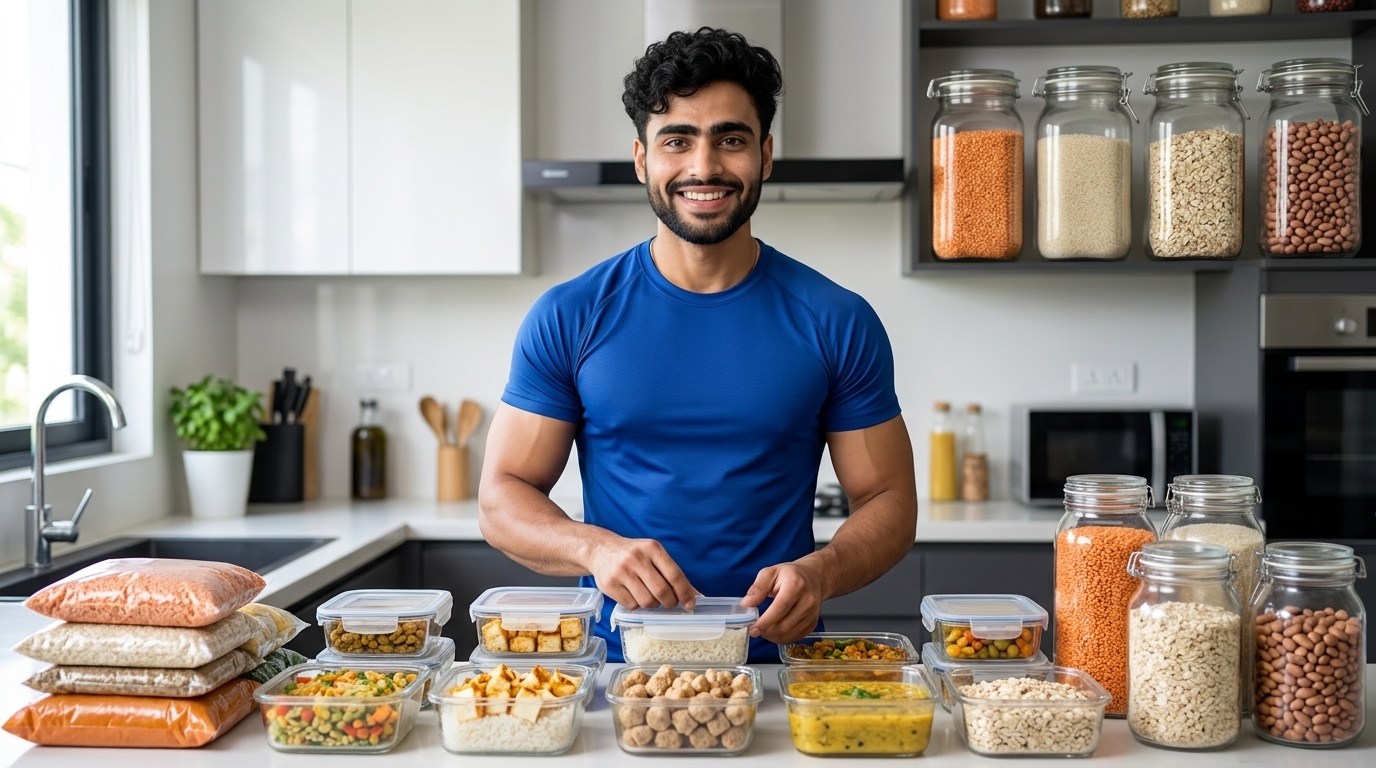
₹100 high-protein Indian muscle gain diet with affordable foods including eggs, paneer, soy chunks, dal, milk, oats and bananas
Budget Diet Roadmap

Table of Contents

Explore this complete ₹100 muscle gain diet guide to discover affordable high-protein foods, a budget-friendly meal plan, and practical nutrition tips for building muscle without overspending.

Introduction

Can You Build Muscle on Just ₹100 Per Day?

Many people believe that building muscle requires expensive supplements, premium protein powders, and costly meals. The truth is that muscle growth depends far more on meeting your daily calorie and protein needs than on how much money you spend. With smart food choices, it's entirely possible to follow a ₹100 muscle gain diet using affordable Indian ingredients.

Budget-friendly foods such as soy chunks, eggs, milk, paneer, lentils, roasted chana, oats, rice, and bananas provide high-quality protein, complex carbohydrates, and essential nutrients needed to support muscle recovery and growth. These everyday foods can often deliver better nutrition per rupee than many expensive supplements.

In this science-backed guide, you'll learn how muscle growth works, discover the best high-protein foods under ₹100, compare their nutritional value, and follow a complete ₹100 Indian muscle gain meal plan designed for students, beginners, and anyone looking to build muscle on a budget.
Chapter 01

Why Nutrition Matters for Muscle Gain

Building muscle isn't just about lifting weights. Your body needs enough calories, high-quality protein, carbohydrates, healthy fats, and essential nutrients to repair damaged muscle fibers and support continuous muscle growth.

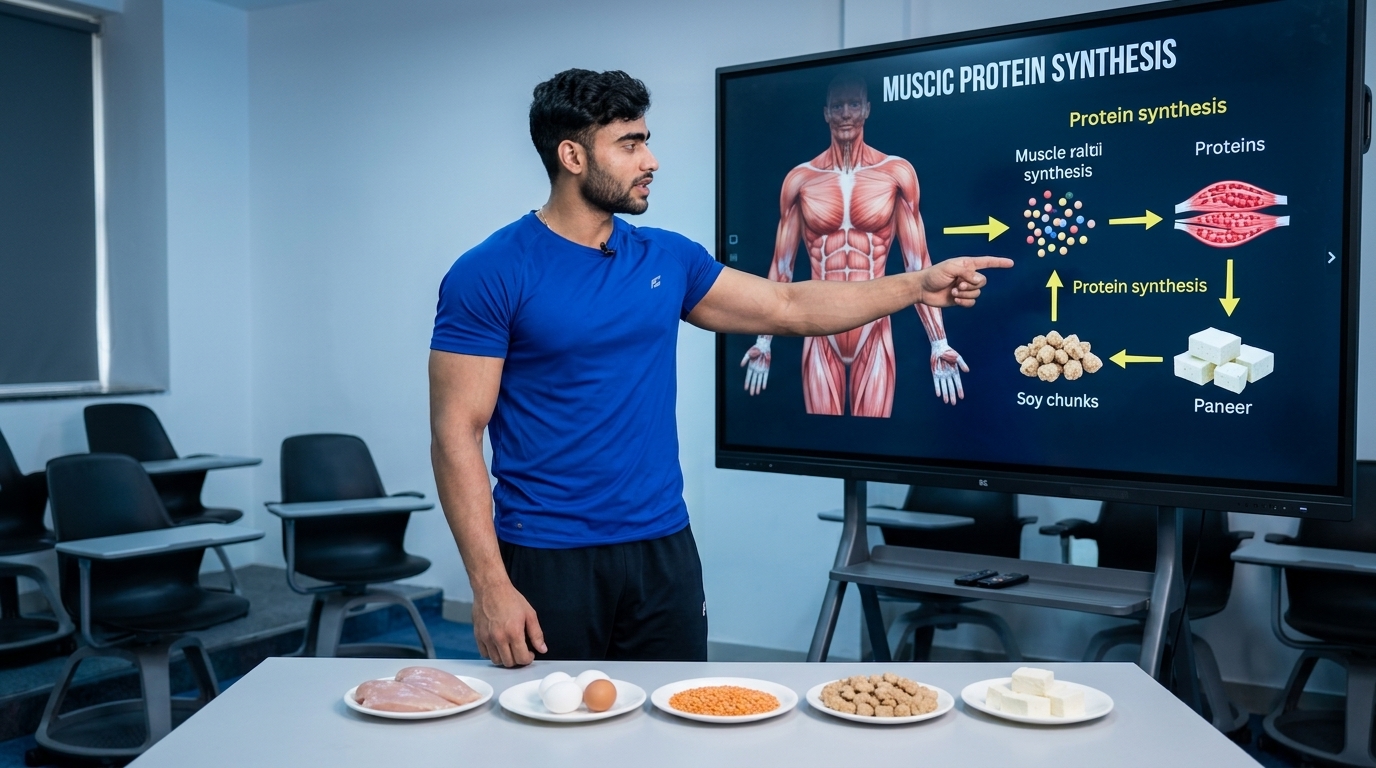
Every strength training session creates tiny tears in your muscle fibers. During recovery, your body repairs these fibers using amino acids from dietary protein, making them stronger and slightly larger than before. This natural process, known as muscle protein synthesis, is the foundation of muscle growth.

While expensive supplements often receive the most attention, they aren't the deciding factor. What matters most is consistently consuming enough protein and calories every day. Affordable Indian foods such as soy chunks, eggs, milk, paneer, lentils, roasted chana, rice, oats, and bananas can easily provide the nutrients required for muscle gain without exceeding a ₹100 daily budget.

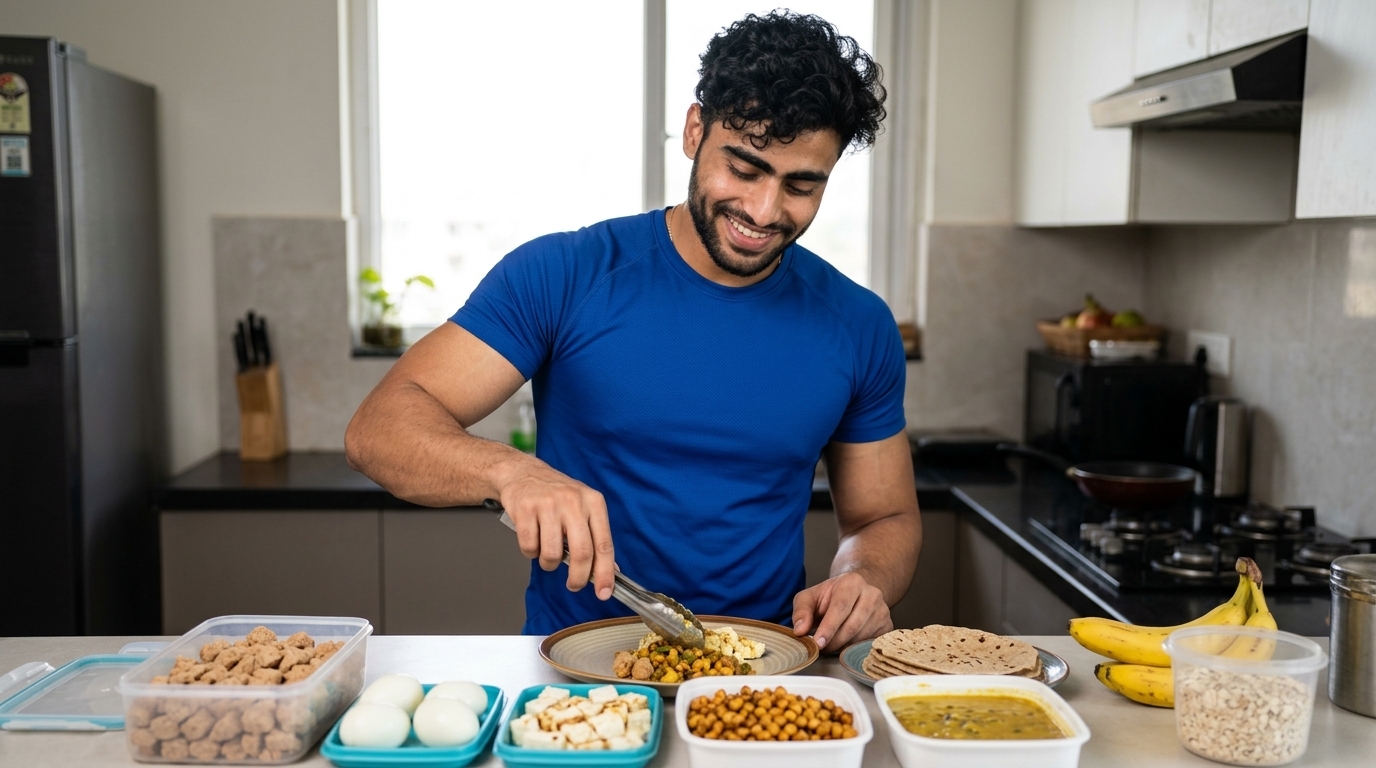
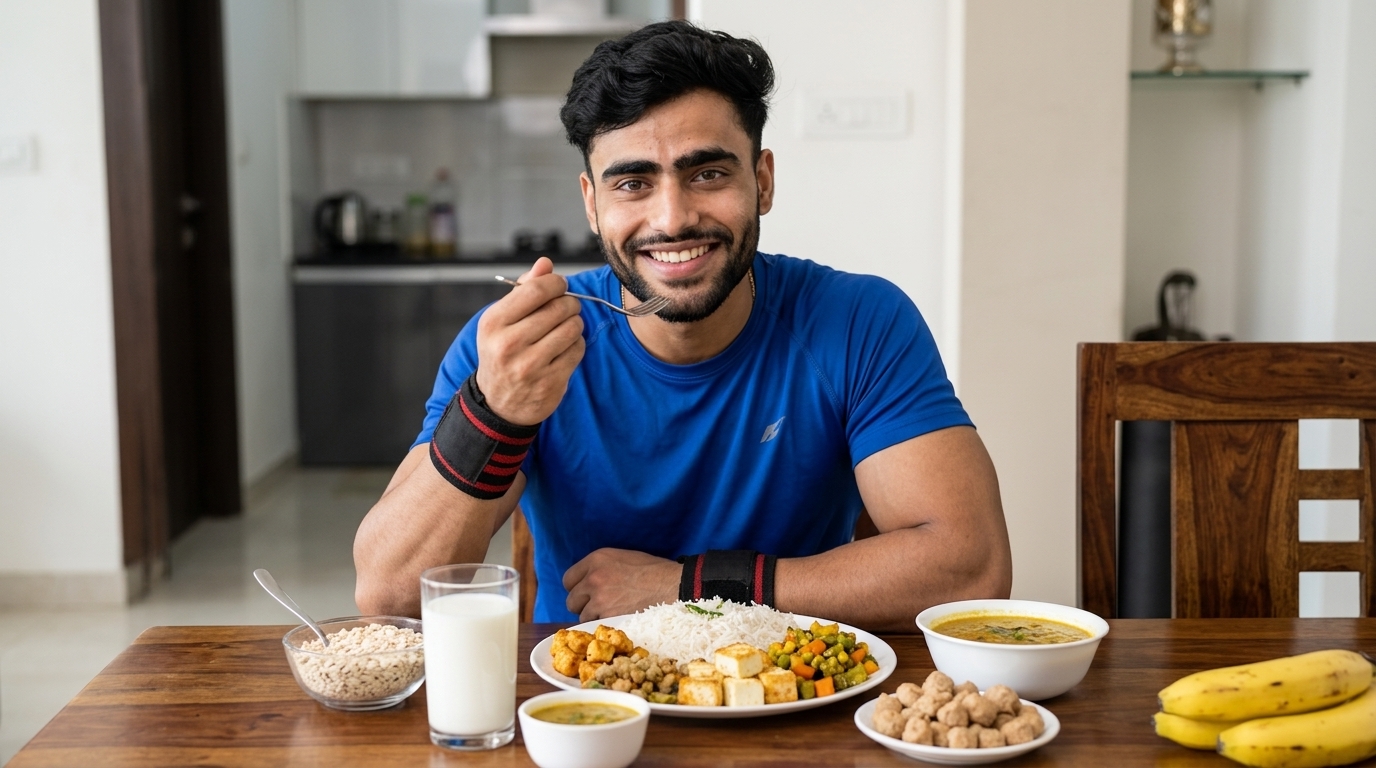
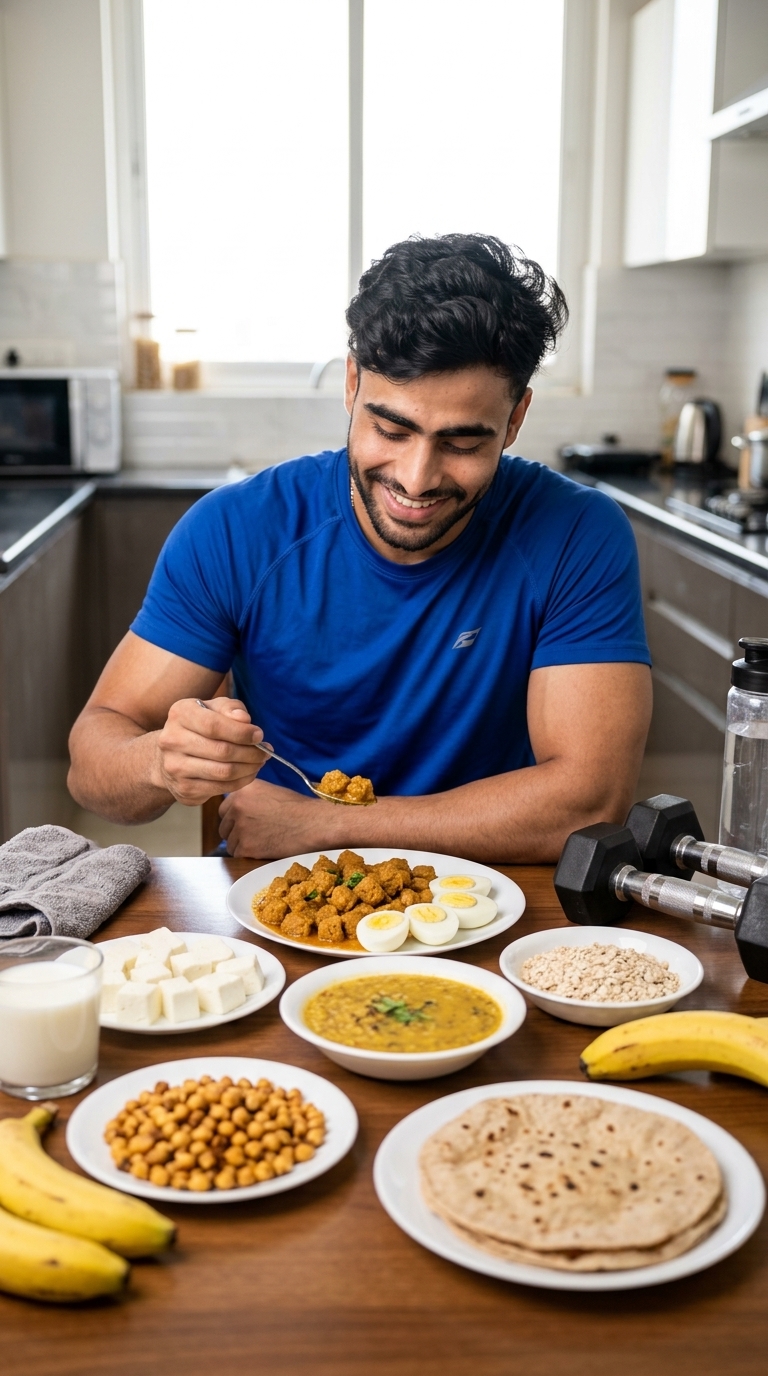
Balanced Indian muscle gain meal with soy chunks, eggs, paneer, dal, rice, oats, milk and bananas arranged on a table
Figure 01

Muscle growth depends on consistently eating enough protein, calories, and nutrient-rich whole foods—not on expensive supplements.

Quick Facts

Key Things to Remember

Muscle growth requires consistent strength training and proper recovery.

Protein provides the amino acids needed to repair and build muscle tissue.

Affordable foods like soy chunks, eggs, milk, paneer, and dal can easily support muscle gain.

Consistency in meeting your daily calorie and protein goals matters more than buying expensive supplements.

Chapter 02

How Muscle Growth Works

Muscle gain is the result of a simple but powerful cycle: train your muscles, fuel your body with the right nutrients, recover properly, and repeat consistently. Understanding this process helps you make smarter nutrition choices, even on a limited budget.

Step 01

Perform resistance training to stimulate your muscles.

Step 02

Tiny muscle fibers experience microscopic damage during exercise.

Step 03

Eat enough protein and calories to support muscle protein synthesis.

Step 04

Rest and sleep allow your muscles to recover and become stronger.

Step 05

Repeat the cycle consistently to build muscle and increase strength over time.

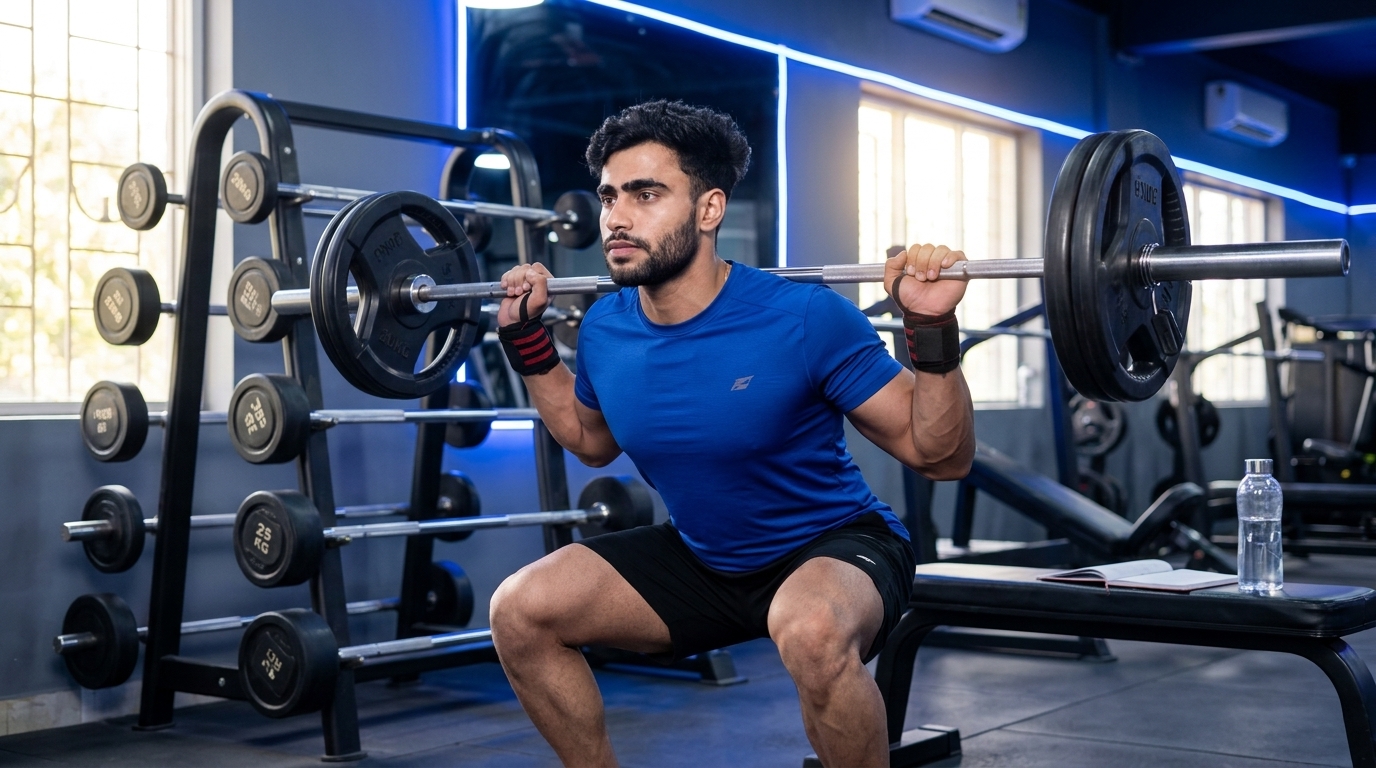
Illustration of the muscle growth process showing training, nutrition, recovery and muscle development
Figure 02

Muscle growth is driven by consistent resistance training, adequate protein intake, sufficient calories, quality sleep, and progressive overload over time.

Chapter 03

Best Budget High-Protein Foods for Muscle Gain

You don't need expensive protein powders to build muscle. Many affordable Indian foods provide excellent protein, carbohydrates, healthy fats, and essential nutrients while keeping your daily food budget close to ₹100.

Soy Chunks

Protein Champion. One of the most affordable protein sources in India, providing around 50–52 g of protein per 100 g (dry weight) while costing only a fraction of premium supplements.

Eggs

Complete Protein. Rich in all essential amino acids, eggs are highly digestible, support muscle recovery, and are one of the best value-for-money foods for muscle gain.

Milk

Recovery Fuel. Milk naturally contains both whey and casein proteins along with calcium, making it an affordable post-workout and bedtime nutrition option.

Dal & Lentils

Daily Staple. Lentils provide protein, complex carbohydrates, fiber, iron, and other essential nutrients that support training and overall health.

Oats & Rice

Energy Source. These affordable carbohydrate-rich foods replenish glycogen stores and provide the energy needed for intense workouts and muscle recovery.

Bananas & Peanuts

Budget Snack. Bananas supply quick carbohydrates while peanuts contribute protein and healthy fats, making them ideal low-cost snacks for active individuals.

Chapter 04

Complete ₹100 Muscle Gain Meal Plan

A limited budget doesn't have to limit your progress. Here's an example of a balanced ₹100 Indian muscle gain diet that provides plenty of protein, complex carbohydrates, healthy fats, and micronutrients to support training and recovery.

Breakfast

Oats cooked with milk, one banana, and a handful of roasted peanuts for a protein-rich breakfast that provides sustained energy throughout the morning.

Lunch

Rice or chapatis with dal, seasonal vegetables, and soy chunks to provide high-quality protein, fiber, and essential vitamins.

Pre-Workout Snack

A banana with roasted chana provides affordable carbohydrates and protein to fuel your workout without feeling heavy.

Post-Workout

A glass of milk with boiled eggs or paneer helps replenish protein and supports muscle recovery after resistance training.

Dinner

Chapatis or rice with dal, soy chunks or paneer, and vegetables to complete your daily calorie and protein intake.

Approximate Daily Nutrition

Around 2,000–2,300 kcal and approximately 90–110 g of protein, depending on food quantities, making it suitable for many beginners looking to build muscle on a budget.

Chapter 05

Tips to Maximize Muscle Gain on a Budget

Building muscle isn't about spending more—it's about following the right habits consistently. These simple, science-backed strategies will help you get the best results from your ₹100 muscle gain diet.

Eating protein with every meal

Prioritize Protein at Every Meal

Include affordable protein sources such as soy chunks, eggs, milk, paneer, dal, or roasted chana in every meal to support muscle protein synthesis throughout the day.

Progressive overload in strength training

Train with Progressive Overload

Gradually increase the weight, repetitions, or training volume over time. Muscles grow only when they are consistently challenged.

Healthy calorie surplus for muscle gain

Maintain a Small Calorie Surplus

Eating slightly more calories than you burn gives your body the extra energy needed to build new muscle tissue without excessive fat gain.

Quality sleep for muscle recovery

Prioritize Sleep and Recovery

Aim for 7–9 hours of quality sleep every night. Most muscle repair and recovery occur while your body is resting.

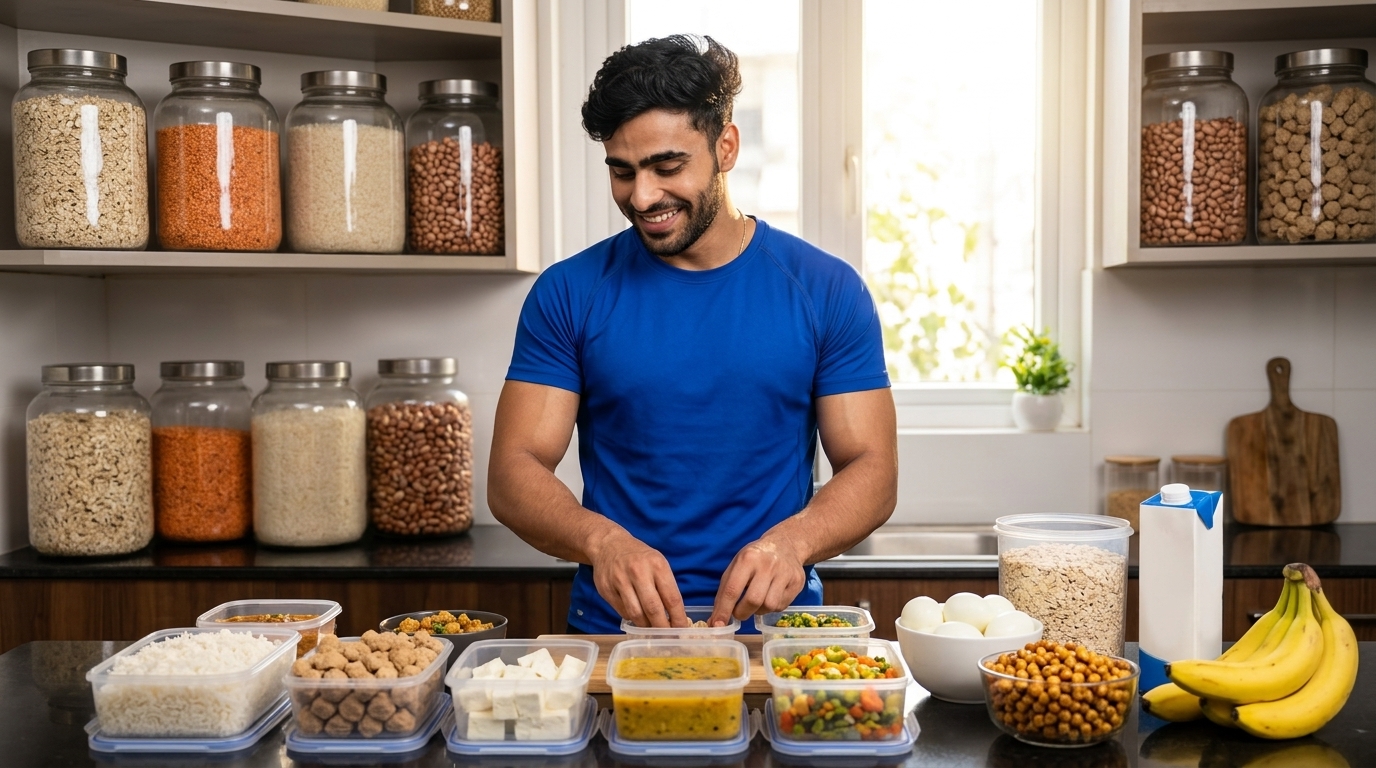
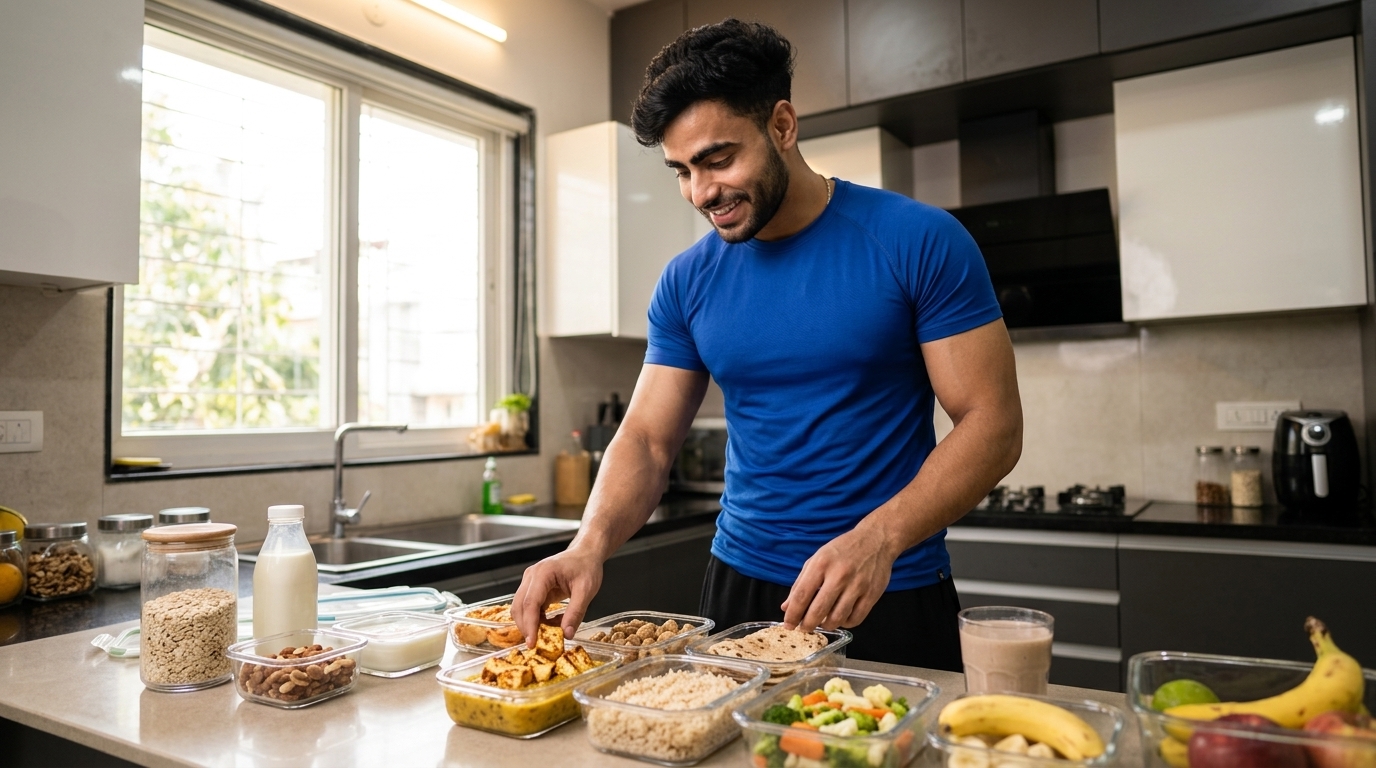
Meal preparation with affordable Indian foods

Buy in Bulk and Meal Prep

Purchasing staples like oats, rice, soy chunks, lentils, peanuts, and roasted chana in bulk can significantly reduce your daily food costs while saving preparation time.

Consistency in training and nutrition

Stay Consistent

The best muscle gain diet is the one you can follow every day. Consistent training, proper nutrition, and patience will always produce better results than expensive supplements alone.

Summary

Key Takeaways

If you remember only a few things from this guide, these are the most important principles for building muscle on a ₹100 daily budget.

You can build muscle on a ₹100 daily budget. Consistently meeting your calorie and protein needs is far more important than buying expensive supplements.

Affordable foods like soy chunks, eggs, milk, dal, paneer, oats, rice, and peanuts provide excellent nutrition for muscle growth without costing a fortune.

Resistance training, adequate protein, quality sleep, and progressive overload are the four pillars of successful muscle gain.

Preparing meals in advance, buying staple foods in bulk, and following a consistent eating routine can help you stay close to your ₹100 daily budget.

Long-term consistency always beats expensive nutrition plans. Following a realistic, affordable muscle gain diet every day will deliver better results than relying on costly supplements alone.

Frequently Asked Questions FAQs

Frequently Asked Questions

Find answers to the most common questions about building muscle on a ₹100 budget, affordable high-protein Indian foods, meal planning, and maximizing muscle growth naturally.

01 Can you build muscle on just ₹100 per day?

Yes. A well-planned ₹100 diet can provide enough calories and protein to support muscle growth. Foods like soy chunks, eggs, milk, dal, rice, oats, peanuts, and seasonal vegetables make it possible to build muscle without spending a lot of money.

02 How much protein do I need for muscle gain?

Most people looking to build muscle benefit from consuming approximately 1.6 to 2.2 grams of protein per kilogram of body weight each day, along with regular strength training and adequate calorie intake.

03 What are the cheapest high-protein foods in India?

Soy chunks, eggs, milk, paneer, lentils, roasted chana, peanuts, curd, and oats are among the most affordable protein-rich foods available in India. Combining these foods can easily help you reach your daily protein goal.

04 Is soy chunks good for muscle gain?

Yes. Soy chunks are one of the highest-protein vegetarian foods and are also extremely affordable. They are an excellent choice for increasing daily protein intake while staying within a limited budget.

05 Can I build muscle without protein powder?

Absolutely. Protein powder is only a convenient supplement. Most people can meet their protein needs through whole foods such as soy chunks, eggs, milk, paneer, lentils, oats, and other affordable Indian foods.

06 What is a good ₹100 muscle gain meal plan?

A simple plan includes oats and milk for breakfast, rice with dal and soy chunks for lunch, roasted chana and a banana before training, milk after your workout, and chapatis with paneer or soy chunks for dinner. This provides balanced nutrition while keeping costs close to ₹100.

07 How long does it take to build muscle?

Strength improvements often appear within a few weeks, while noticeable muscle growth generally takes several weeks to a few months. Consistency in training, nutrition, and recovery is the key to long-term progress.

08 Can vegetarians build muscle on a budget?

Yes. Vegetarian foods such as soy chunks, paneer, milk, curd, lentils, chickpeas, peanuts, oats, and whole grains provide enough protein and calories to support muscle growth while remaining affordable for most people.

Continue Learning Continue Learning

Explore More Budget Nutrition & Muscle Gain Guides

Continue learning with evidence-based articles covering muscle gain, affordable nutrition, high-protein foods, meal planning, and practical fitness strategies for building muscle without spending a fortune.